

All Églomisé Everything
A love letter to gilded glass

My infatuation with églomisé began innocently enough, when a tiny green and gold-flecked mirror beckoned at me from the window of a secondhand sportswear shop in San Telmo and sent me on a wild goose chase across Buenos Aires’ antique shops and flea markets.
Luckily, my search was not in vain: I came home with a scalloped Spanish colonial-style églomisé mirror with gilt scrollwork that somehow managed to glitter even in the dim light of a dusty stall at Mercado de las Pulgas.
I returned home, my new acquisition swaddled like a newborn in my favorite scarf, and immediately fell down the rabbit hole in search of églomisé accents that would suit my apartment’s jewel box aesthetic.
I spent hours combing through inventory on 1st Dibs and Chairish, saving mirrors and lamps and cabinets that were impossibly glamorous and outrageously out-of-budget. In search of more modest prices, I scoured Facebook Marketplace and my local antique shops in vain (as it turns out, the Midwest is hardly the églomisé capital of America).
Finally, I struck gold: a patinaed mirrored vanity, with faded gilded églomisé acanthus leaves, cabriole legs, shell-shaped drawer pulls fit for a mermaid, and questionable provenance (more on that next week), coming up for auction. I wasn’t the only prospective buyer seduced by its siren song, but one high-octane bidding war later, it was mine.
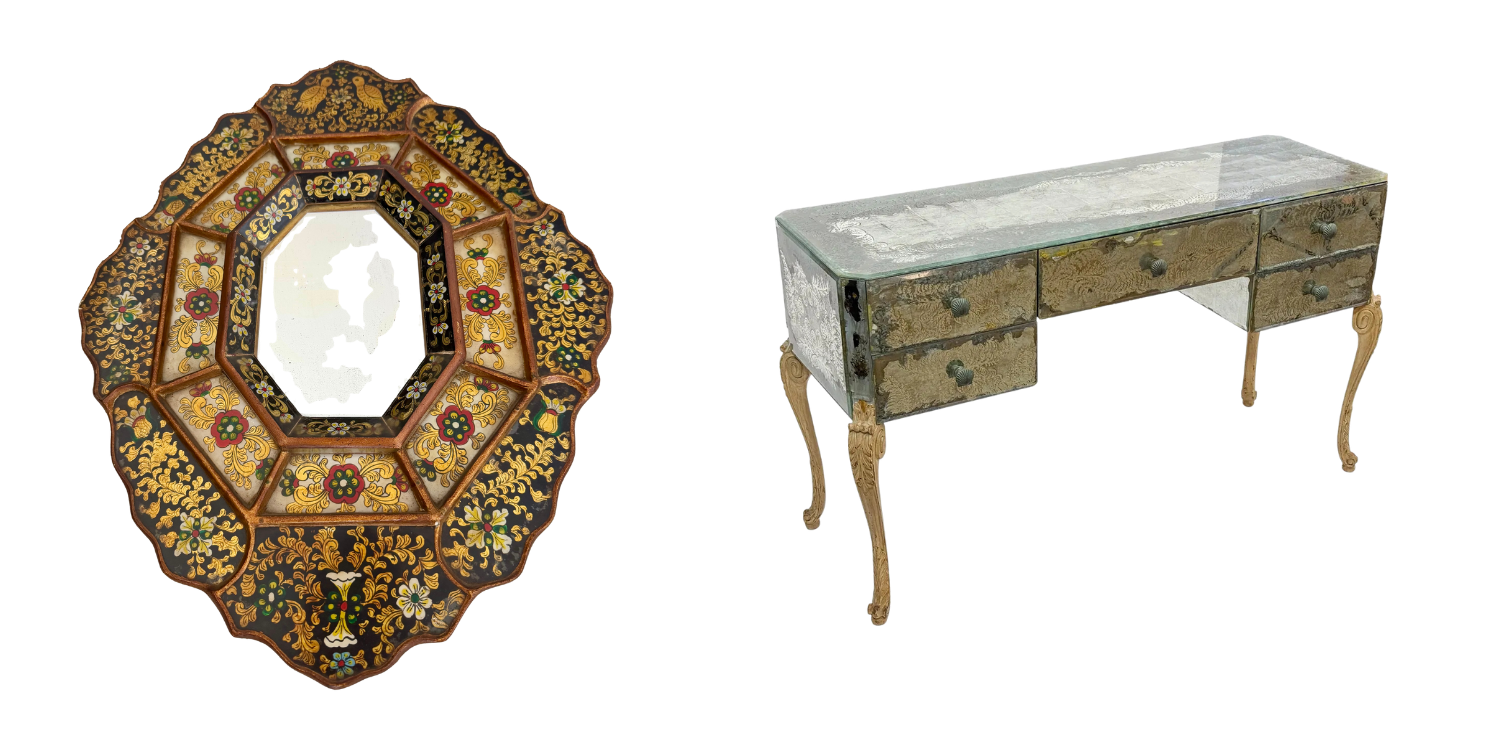
Though I’m now on a self-imposed églomisé hiatus, I can’t help myself from keeping a wish list. Keep reading for the latest pretties that have caught this magpie’s eye.
A brief history of verre églomisé
Though the term verre églomisé didn’t come into fashion until the 18th century, the decorative practice of applying metal leaf - usually gold or silver - to the reverse side of glass has its roots in ancient Hellenistic gold glass techniques, which date back as early as the 4th century BCE.
Not surprisingly, the Catholic Church - known for its enthusiasm for all gold everything - embraced the practice of reverse-gilding glass in the Middle Ages, as a means to capture the essence of the divine in small religious panels, reliquaries, altars, and other precious objects. The technique eventually made its way to Peru in the 16th and 17th centuries, courtesy of Spanish conquistadors and missionaries, who came bearing chests of gilded devotional objects (along with smallpox, measles and typhus, among many other ills).
By the 18th and 19th centuries, verre églomisé had moved beyond the religious realm to become a mainstay in secular European decorative arts: frames, painting, jewelry, clocks and other decorative objects began to gleam with gilded glass. Tiny-yet-ornate jewelry caskets topped with églomisé paintings of tourist attractions became a favorite souvenir of the Grand Tour set.
Around this same time, Chinese merchants began a robust trade in reverse-glass paintings: European merchants shipped mirrors and glass plates to Canton, where local artisans painted genre scenes, landscapes and portraits on the reverse, before shipping the finished works back to Europe as luxury goods. These paintings also became popular with the Chinese aristocracy.
By the 1920s and 1930s, églomisé was on its way to yet another renaissance, this time at monumental scale. In 1935, the SS Normandie - a lavish ocean liner designed to serve as France’s aesthetic ambassador on the high seas - set sail with a massive églomisé maritime mural installed in the first-class Grand Salon.
By the mid 20th-century, églomisé was similarly enshrined in the American design canon, this time as a key feature of Hollywood Regency style: glitzy, glamorous, and theatrical. Regency-era pieces by legendary design house Maison Jansen continue to command a premium today.
Contemporary artists have embraced églomisé, too: former set designer Miriam Ellner has a cult following among interior designers for her large-scale commissions that bring ethereal drama to entire rooms, while sculptor Barbara Nanning applies églomisé techniques to the organic, flowing lines of her small scale sculptures.
The églomisé edit
Mirrors 🪞
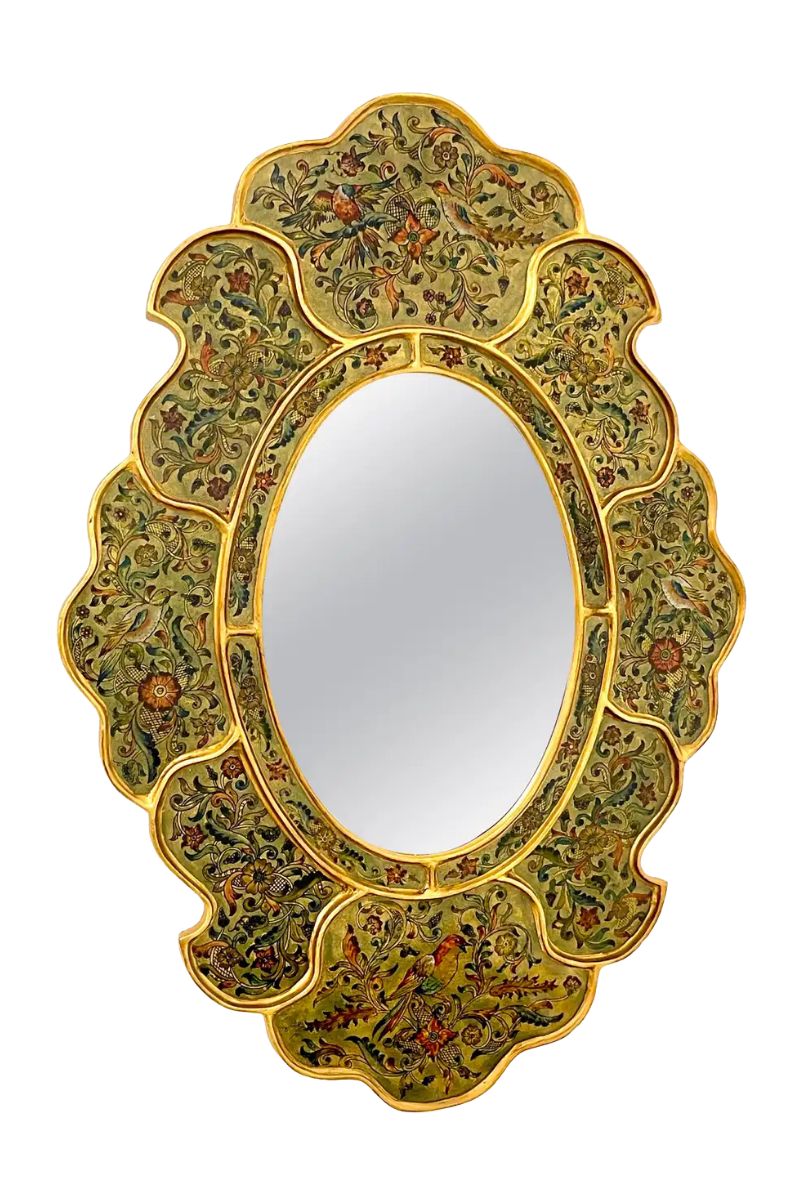
A stunning example of Spanish colonial-style craftsmanship, this mirror’s delicate detailing - with its scalloped gilt frame and exquisite floral patterning - belies its grand size, clocking in at 4 feet tall and 2.5 feet wide.
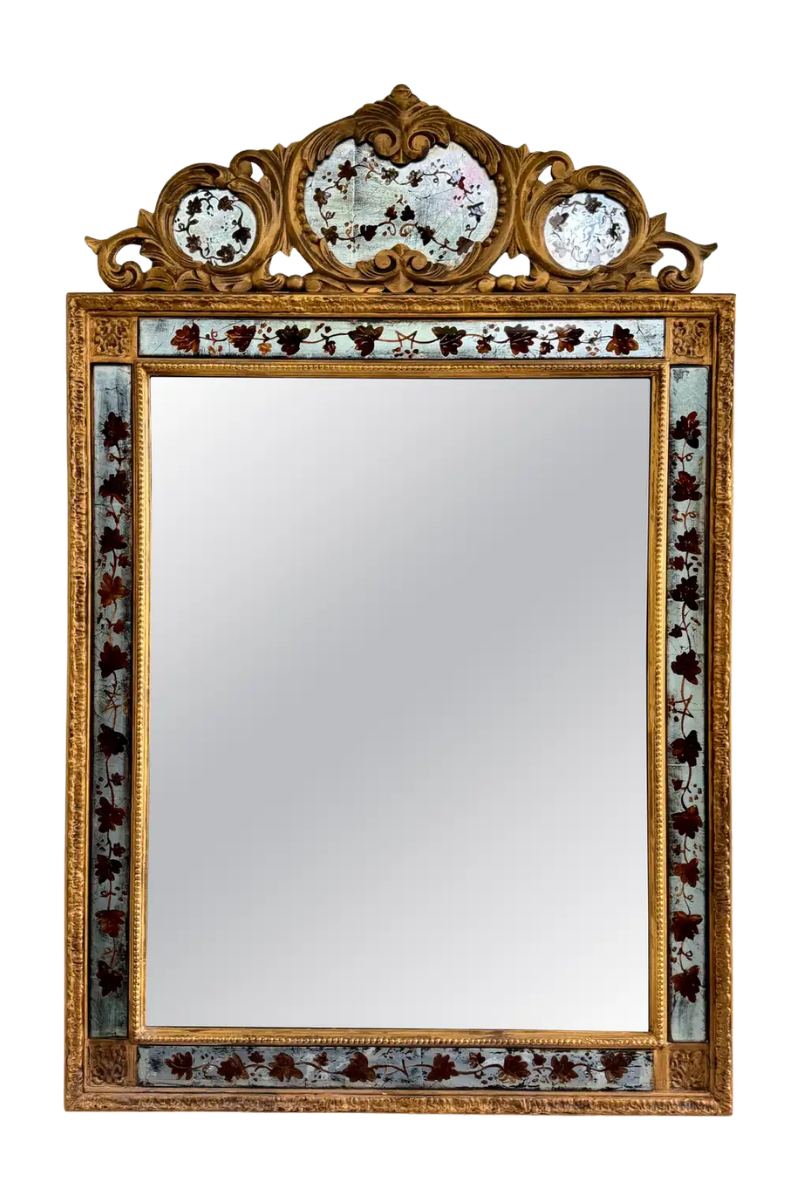
This giltwood mirror personifies the Golden Age of Hollywood: the carved pediment exudes over-the-top theatricality, while the églomisé frame, adorned with painterly acanthus leaves, feels appropriately luxe.
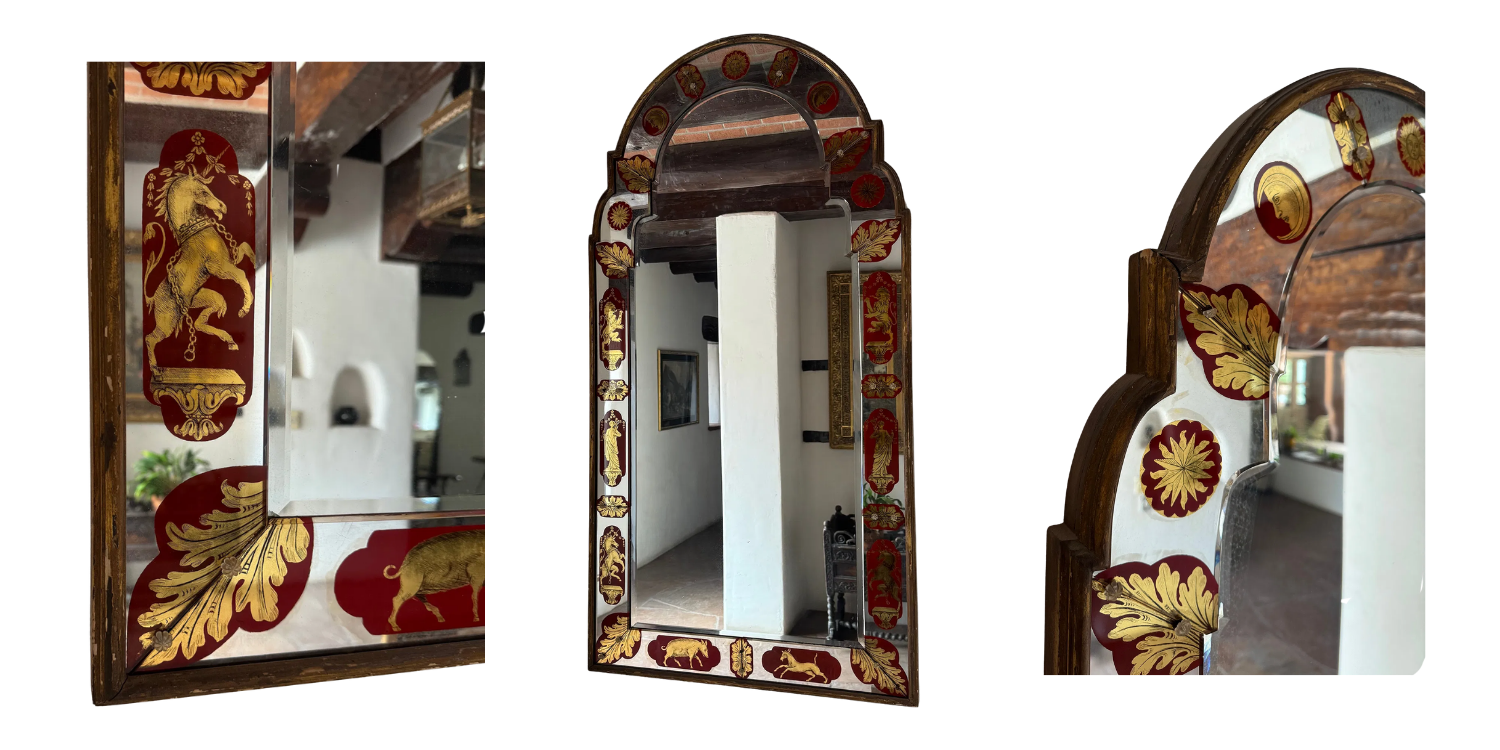
Leave it to the Italians to blend old-world églomisé techniques, ancient symbols from mythology (that unicorn!) and astronomy, and modern graphic lines and color blocking that would make legendary Italian designer Piero Fornasetti proud.
Lighting 💡
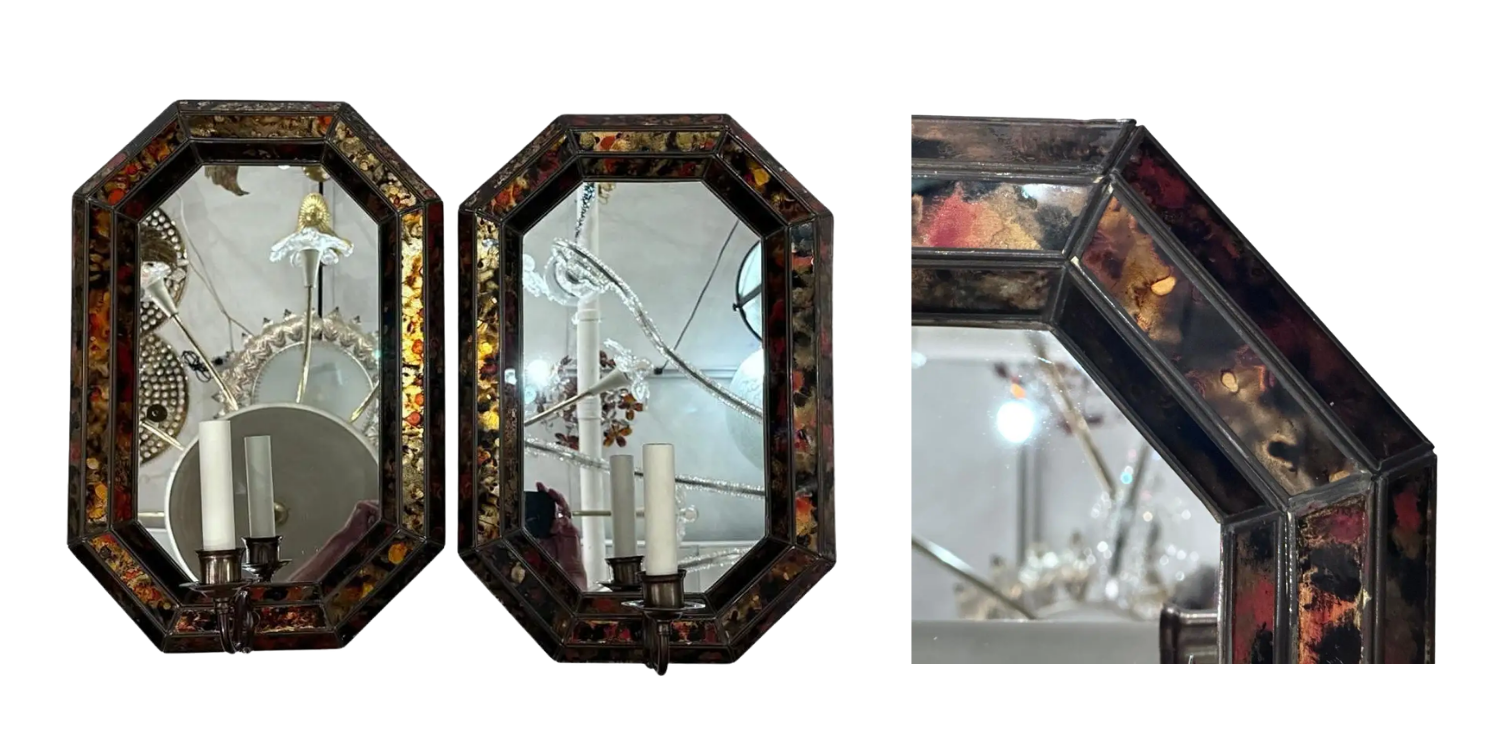
These midcentury French sconces are hypnotizing in the best possible way: the faceted frames bounce light in every direction, while the dappled reds, ambers and greys appear impressionistic, almost watercolor-esque.
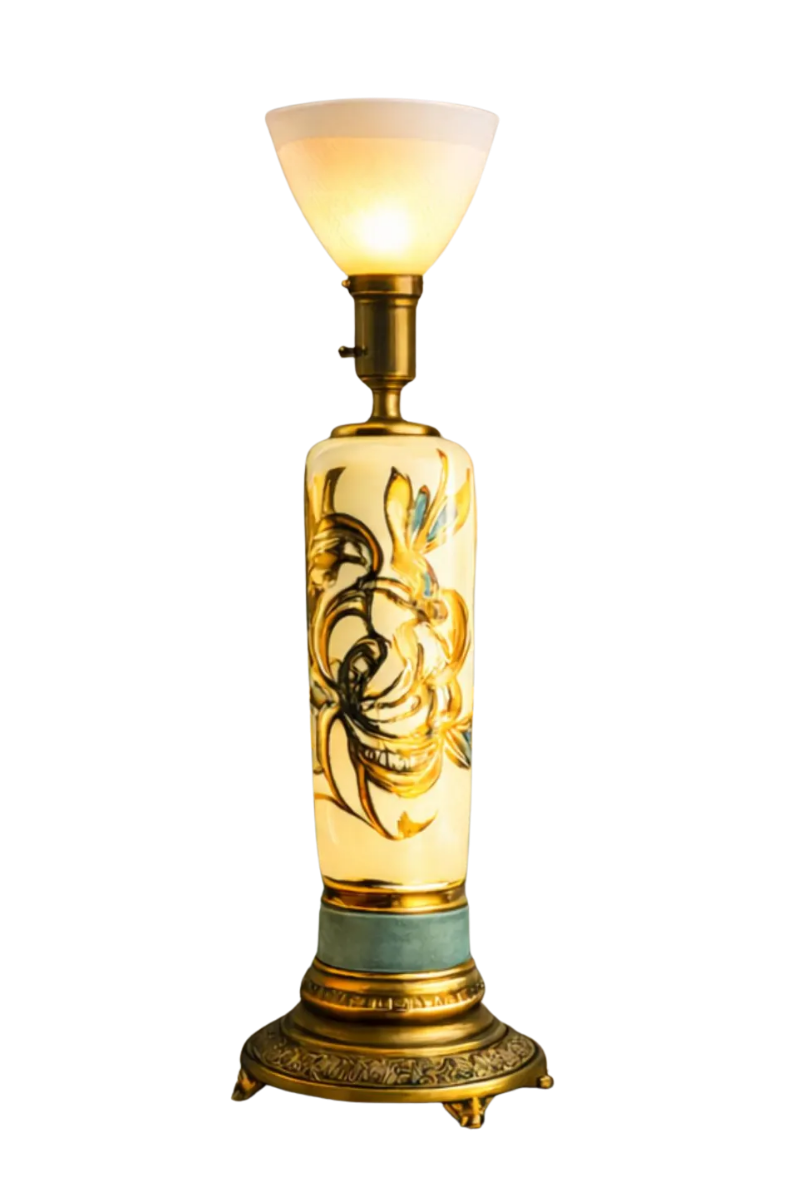
This statuesque lamp (which stands nearly 27 inches tall) is signed “LSY,” signaling that it was likely produced in an Art Deco-era glass studio as an objet d’art, rather than a commodity mass-produced in a factory.
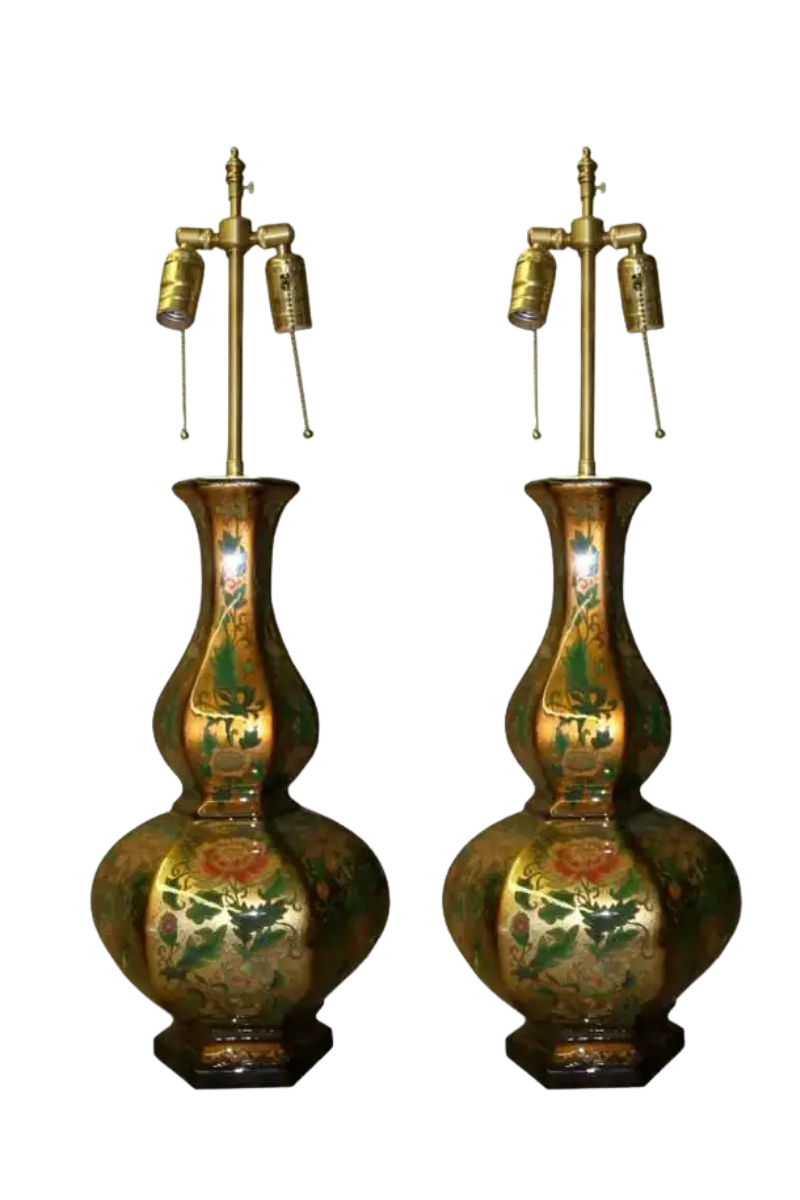
Can you believe that these gourd vases-turned-lamps were painted from the inside out? Each and every flower, leaf and vine was painted using long brushes with exceptional control. Even more astounding? The reasonable price point.
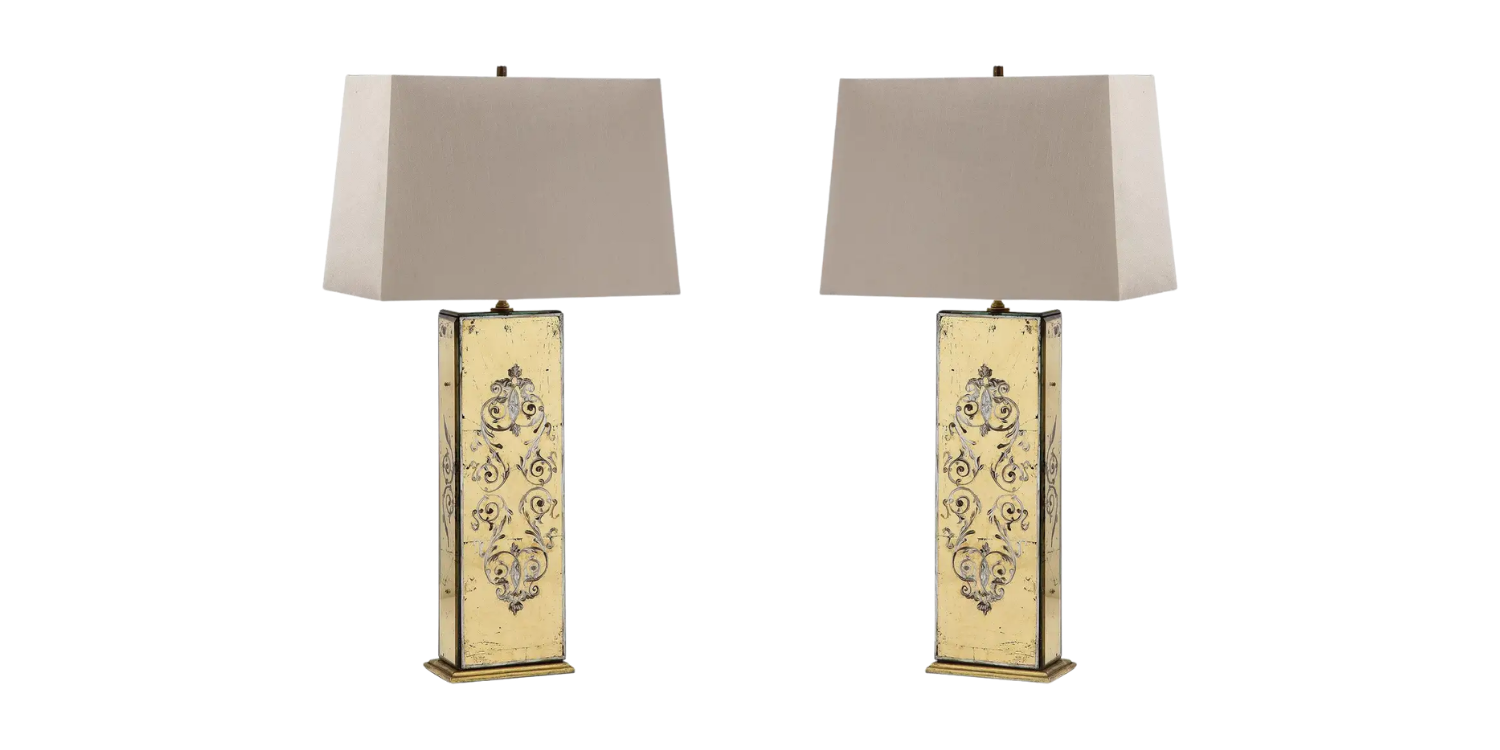
It’s easy to imagine these lamps glowing softly in the early evening light, as a glamorous Hollywood starlet entertains her friends at home. No wonder Maison Jansen was a favorite in high society circles: the Duke and Duchess of Windsor, the Shah of Iran, and Jackie Kennedy among them.
Objets d’art 🎨
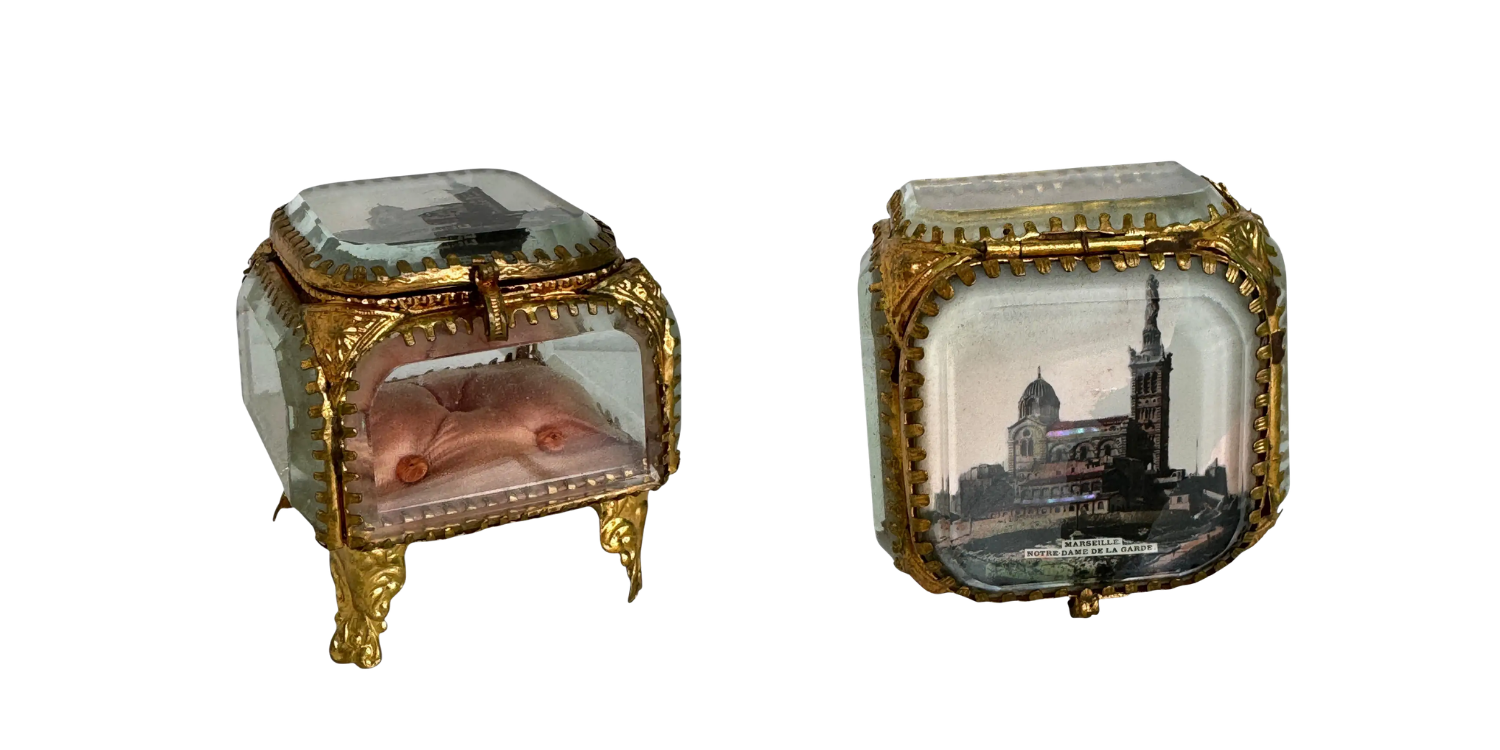
When the jewelry box is this pretty, who cares what’s inside? These small keepsake boxes, with hand-painted églomisé scenes of cathedrals, opera houses, and street scenes on the lids, were the souvenir du jour among the Grand Tour set in the 19th century.

This sculpture may be small - it’s roughly the size of a melon - but it has a commanding presence, with its gilt interior that gives it an otherworldly glow, almost as though it’s about to burst into heavenly song.
Furniture 🪑
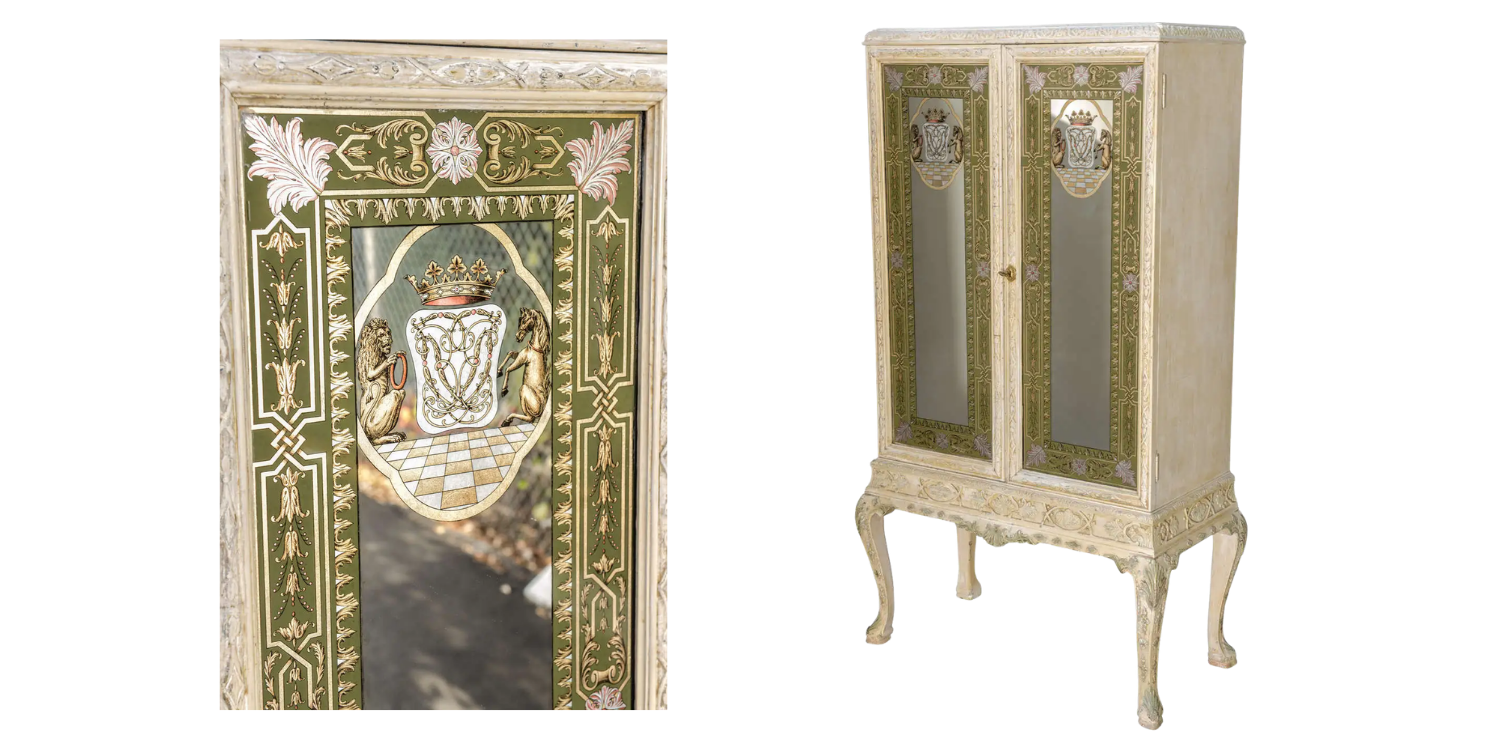
Though this cabinet is American-made, courtesy of J.N. Slack & Company, its vibes are entirely European: the carved whitewashed frame feels French country-inspired, while the precise, graphic lines of the églomisé doors are more reminiscent of Italian styling. The menacing lion, ready to spring into action, adds a dark twist.
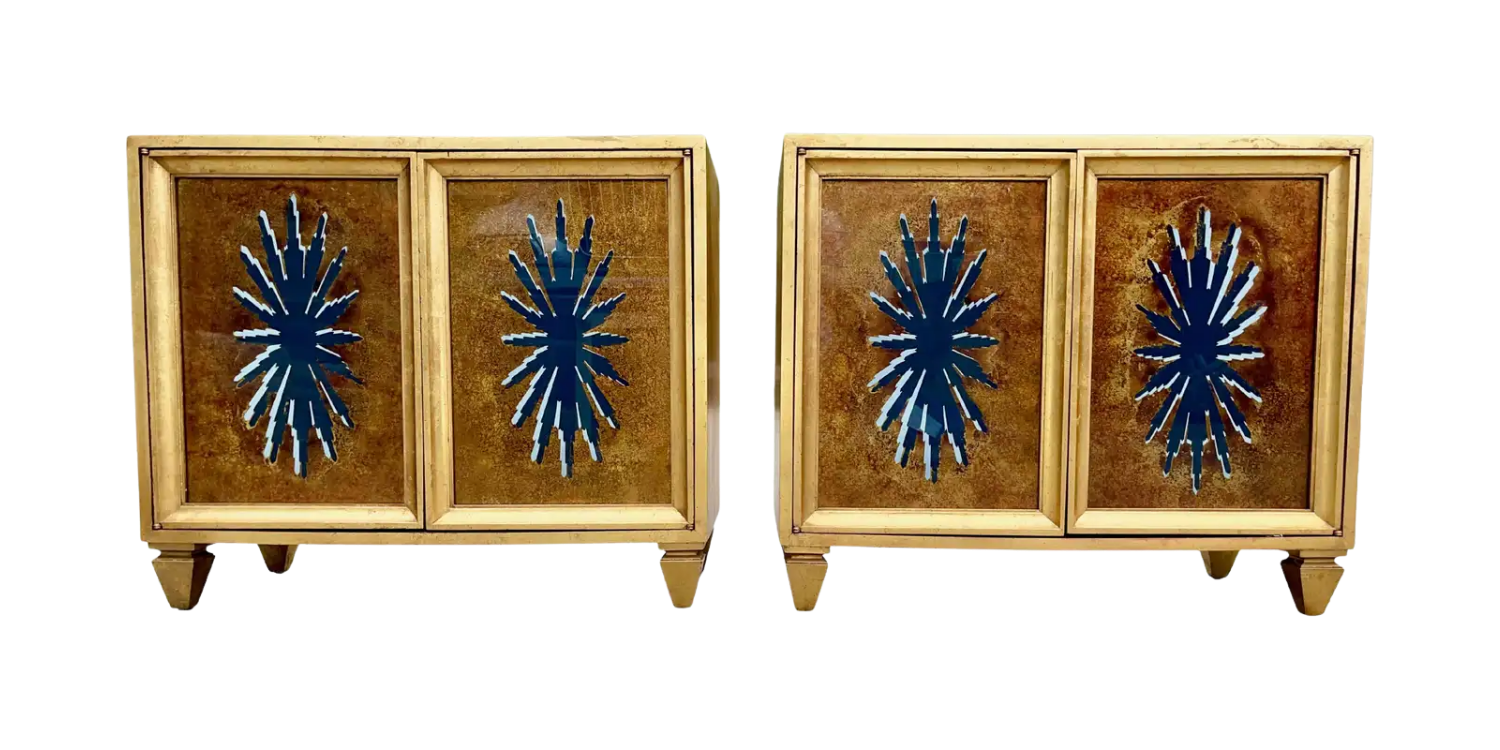
The seller describes the previous owner’s style as “Zsa Zsa on steroids.” Need I say more?
Devine!