

On the Thrill of the (Treasure) Hunt
My search for a Spanish colonial-style églomisé mirror in Buenos Aires

Beads of sweat rolled down my back as I gulped down the last of my water. It was barely 10am - the antique dealers around Plaza Dorrego were still setting up their stalls - and it was already sweltering.
I circled the square like the condors we’d seen scavenging for carrion in El Chaltén - alert and scanning each and every stall for The One. I wasn’t actually looking for anything in particular. I knew what I didn’t want: I wasn’t interested in the jewel-toned vintage seltzer siphons or silver mate gourds or the ceramic pingüinito wine pitchers that the San Telmo market is known for.
Instead, I wanted to be wowed. I wanted the same “I’ll know it when I see it” recognition that had me hauling a chandelier home from Paris in my carry-on a few months earlier. I wanted an object with a story, one that would take me back in an instant to that sunny December morning in Buenos Aires.
By the time I’d completed my third lap around the square - popping into the shops along Calle Defensa when I needed a blast of AC - I knew that it was time to call it. Nothing was speaking to me: not the stacks of imported European porcelain plates, nor the art deco baubles nor the polished copper pots that practically sparkled in the sunlight. I was only briefly tempted by a pile of luxe midcentury fur coats, until the thought of schlepping a floor-length mink back to my apartment in Palermo Soho in the oppressive heat had me feeling faint.
I’d spent the previous afternoon scrambling to ensure I had enough cash for the market: trying (and failing) to find an ATM that would process my withdrawal, before finally biting the bullet and wiring myself the money via Western Union, just minutes before they closed for the day. My wad of hard-won pesos - worth about $200 USD - was burning a hole in my pocket.
Finally, I gave up, retreating down a cobblestoned side street, in search of shade and respite from the crowds. I was halfway down the block when something shiny and colorful caught my eye, hanging on the wall of a secondhand sportswear shop. Ever the magpie, I backtracked to the entrance, nodded at the proprietor, and made a beeline not for the racks of Lionel Messi jerseys, but for the small mirror that hung on the back wall.
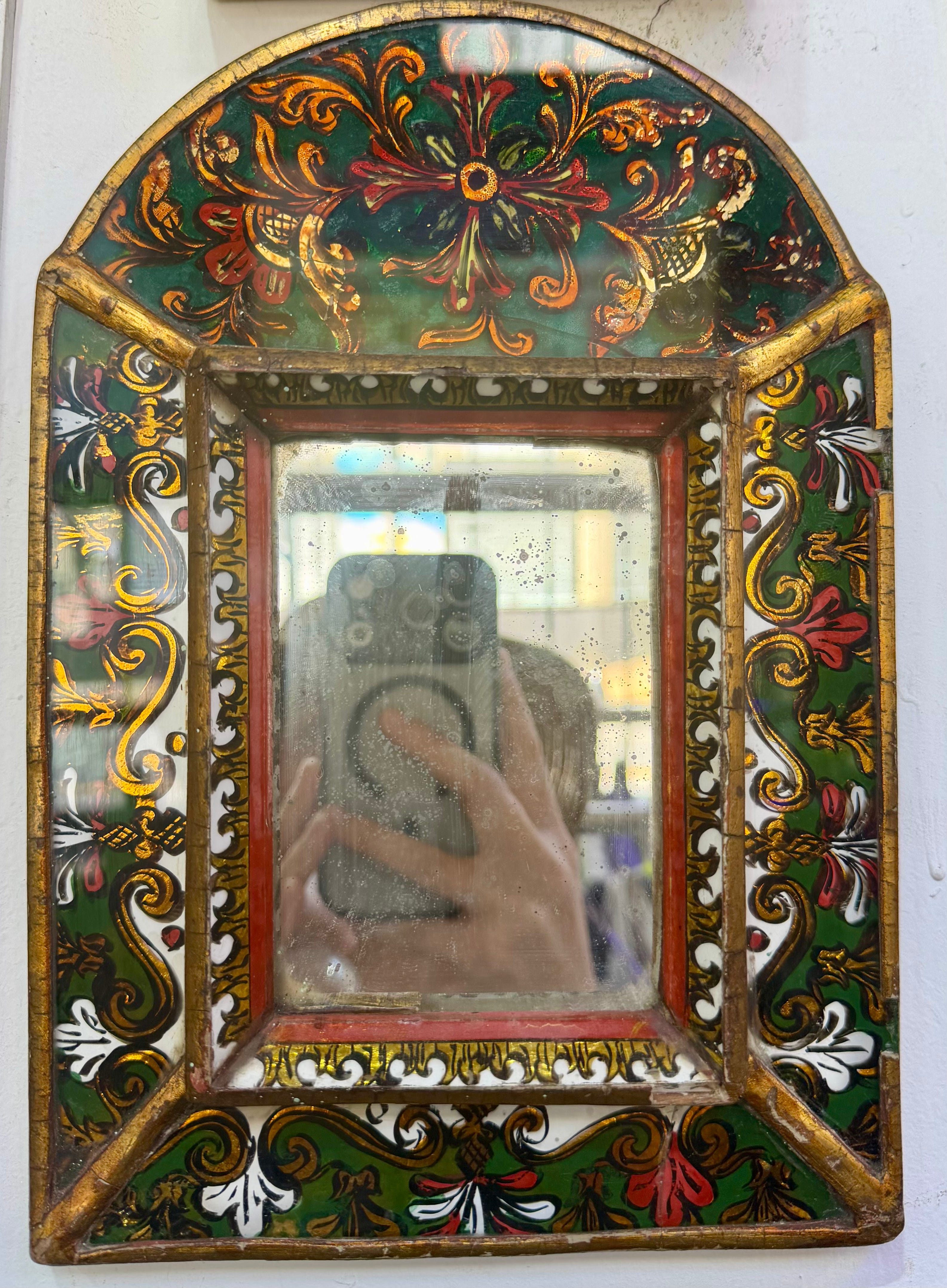
What the mirror lacked in size - it was no more than 10” wide - it made up for in character, with its Spanish colonial-style arched gilt frame and patinaed surface that distorted my reflection. But it was the border that really took my breath away, with its pattern of gilt scrollwork, brick red flowers, and bright white leaves against a forest green background painted not on wood but directly on glass.
I worked up the courage to ask the shopkeeper, in my rusty Spanish, whether the items on the walls were for sale. He responded in a rapid-fire porteño dialect, saying that no, they weren’t for sale, they were for decor only - but if I told him what I was interested in, he’d tell me whether he was willing to entertain an offer. When I pointed at the mirror, he shook his head: no, it wasn’t for sale - it was a family heirloom.
I walked out of the shop feeling sorry for myself - until my appraisal instincts kicked in. I now had a vision for what I wanted - an églomisé mirror - and a hunch that, in a city filled with Spanish colonial-style antiques, I could hunt another one down. But, curiously, my intuition told me that I wouldn’t find The One in San Telmo.
Within seconds, I’d ordered an Uber to Mercado de las Pulgas, a train station-turned-sprawling flea market in Colegiales that is a designer favorite but still, somehow, manages to fly under the tourist radar. I breathed a sigh of relief when I walked in: it was noticeably cooler inside, thanks to the high, vaulted ceilings, and practically empty compared to San Telmo’s ultra-crowded streets.
I methodically wound my way through the labyrinthine stalls, senses sharp, like a puma stalking its next guanaco. The variety of items on display - imported European furniture, midcentury memorabilia, a densely-packed gallery devoted entirely to artworks and objects from Asia, tchotchkes of every shape and size - was staggering. I combed my way through each and every row, gazing longingly into stalls that were locked and lights off, with handwritten WhatsApp numbers taped to the door for weekend inquiries.
By the time I reached the last row of stalls, I had nearly lost hope that I’d find The One - until, out of the corner of my eye, I spotted a large painted mirror hung above the back doorway of a dusty, dimly lit stall where every shelf was packed with porcelain figurines.
I ducked in, eager to get a better look. I was thrilled to realize that it was, indeed, églomisé - until I saw an enormous crack in the glass on the right side of the frame. The closer I got, the more precarious the mirror’s condition appeared: a network of cracks spiderwebbed out across the entire frame. I wasn’t sure that it would survive being gently plucked off of the wall, much less a long-haul flight packed in my oversized roller bag. Dejected, I kept moving.
A few minutes later, another mirror caught my eye - not églomisé this time, but a small gilt sunburst mirror hanging in the back corner of another stall that I’d already walked by at least twice. I knew right away that it wasn’t what I wanted - my heart was set on églomisé - but I walked in anyway, making polite small talk with the dealer as I browsed.
Finally, I turned to leave - and as I did, I spotted an églomisé mirror with a fire engine red frame hanging next to the exit, completely hidden from view from the corridor outside. Upon closer inspection, it appeared to be in excellent condition: patinaed, but with no major cracks or repair sites. The dealer told me that it was typical of Andean colonial style, and that it had likely journeyed from Peru at some point during the 20th century. Even better? The price was right, at about $120 USD.
Still, I hesitated: though the vibrant colors were stunning, I struggled to envision the perfect place for it in my condo. My predator’s instincts signaled that it still wasn’t time to strike.
I walked away, convincing myself to take one final lap before making any decisions. And, as fate would have it, just as I was about to go back for the red one, I spotted another painted mirror, hung high on a dark wall above a rickety shelf crammed with crystal goblets.
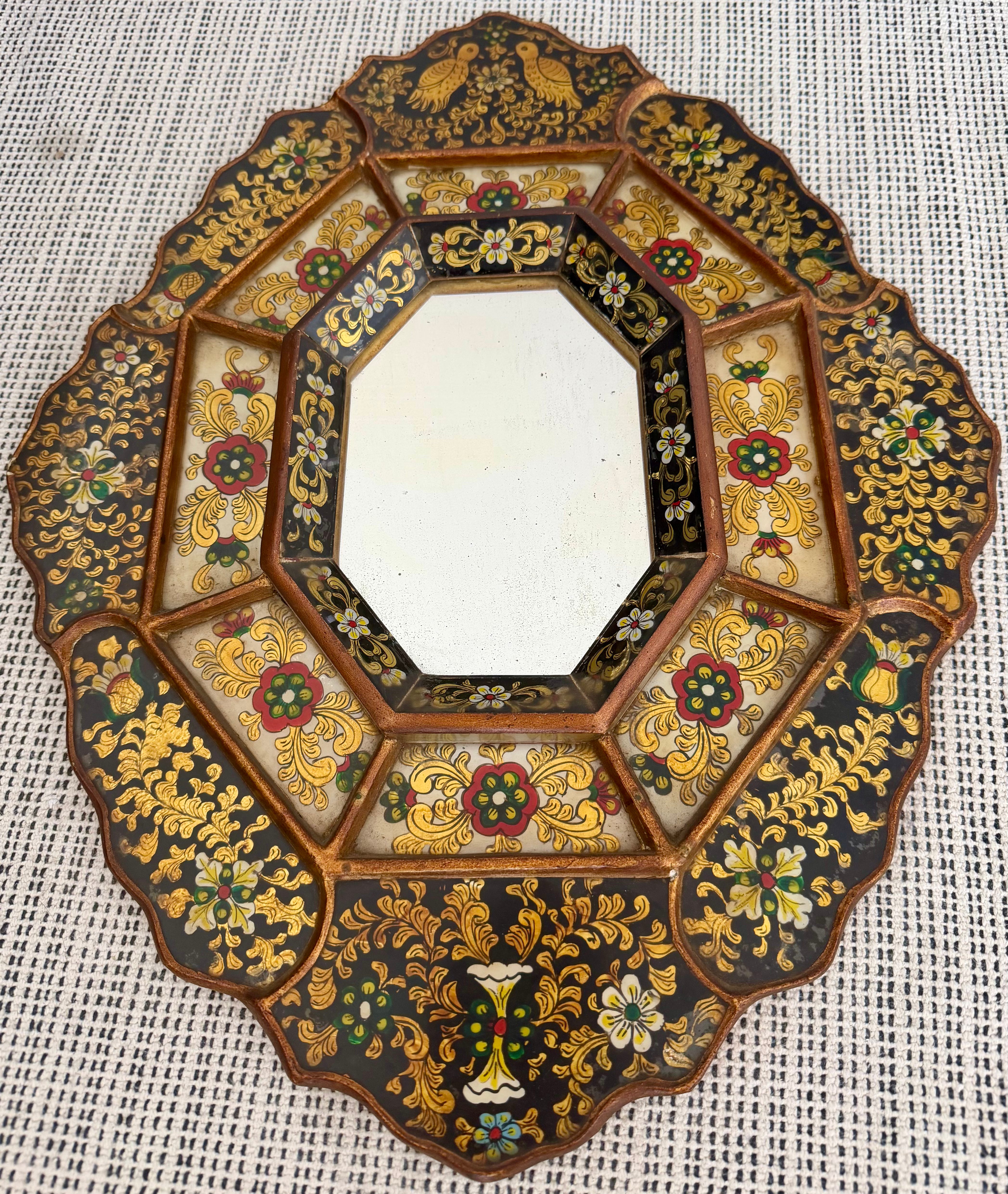
It was impossible to tell whether it was actually églomisé from that distance, though the gold-flecked scrollwork had me convinced. When I asked the dealer if it was painted on glass, she brushed me off, saying that it was of course painted on wood. When I asked if I could take a closer look, she retorted that she’d only take it off the wall if I agreed to buy it. Her asking price? $80 USD.
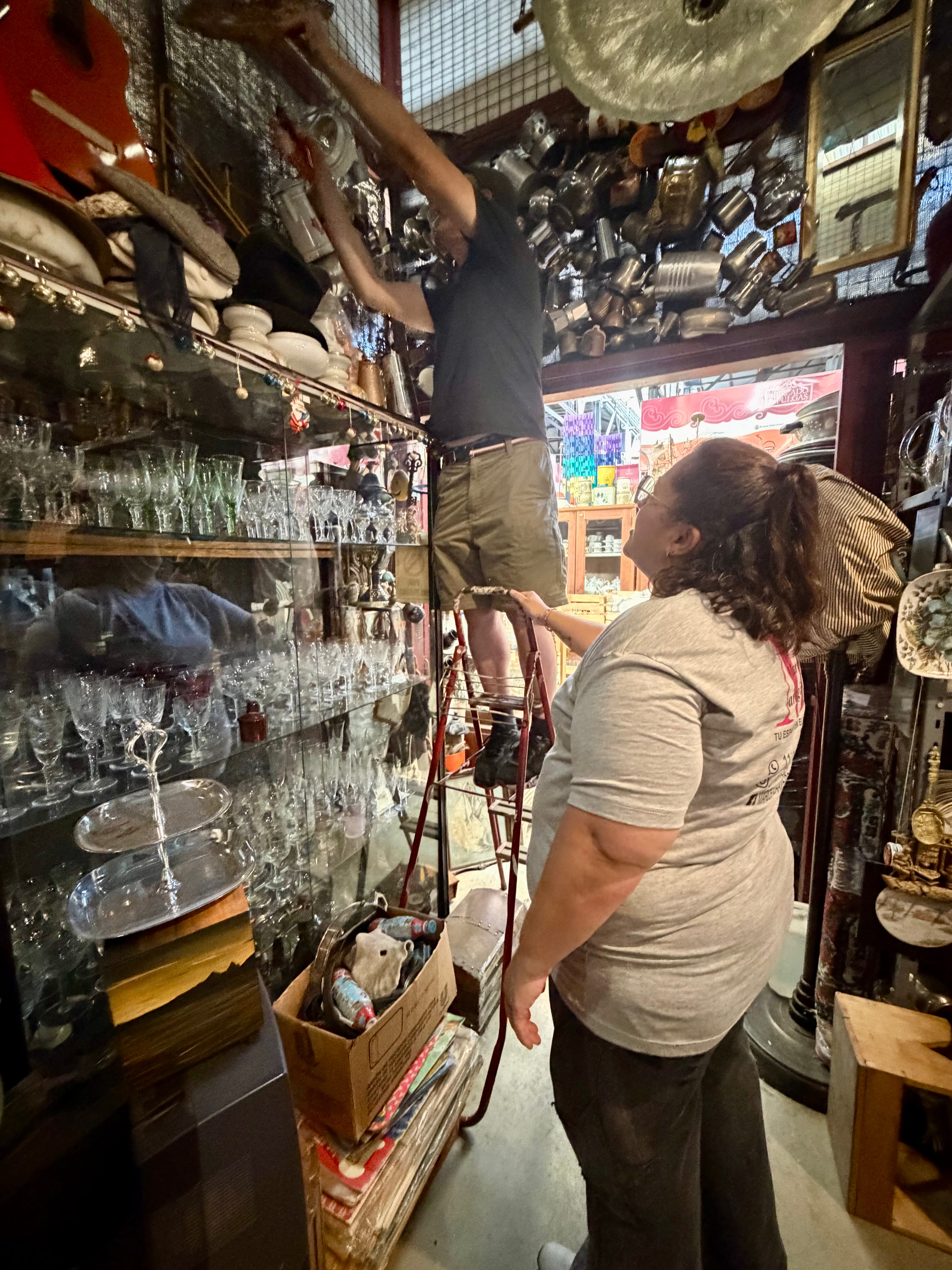
A minute later, her husband was climbing up a flimsy ladder, pliers in hand to wrestle the mirror off the wall; she braced the ladder with her forearms while I counted out a stack of 10,000 peso bills. I beamed when a stylish Argentine woman saw the mirror coming off of the wall and complimented my purchase, saying “Qué preciosa” - how beautiful - before switching effortlessly to English to ask where I was from.
The dealer wrapped the mirror in layer after layer of newspaper and bubble wrap, moving so quickly that I barely had a chance to get a good look before it was neatly packed away. Though I wouldn’t confirm that it was indeed églomisé until I returned to my apartment later that night, I emerged into the afternoon sunlight, mirror in tow, feeling victorious.
The purchase alone was enough to satiate my inner collector-predator. But though I have no intention to resell, my appraisal instincts weren’t fully satisfied until I hopped onto 1st Dibs, curious to see what dealers were asking for similar pieces. Imagine my delight to find several comparables listed for $1,000+.
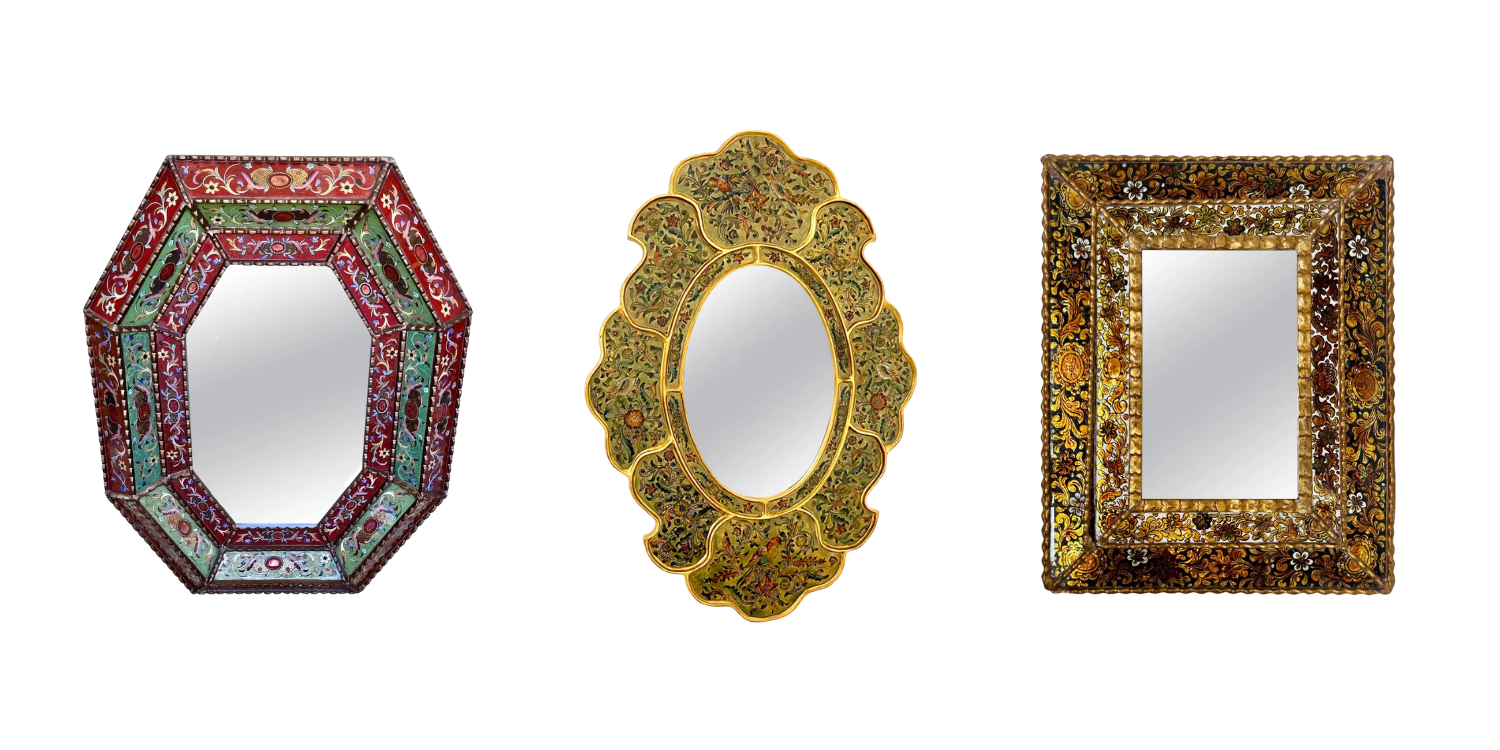
Such a fun treasure hunt....especially when it resulted in the purchase of a true treasure!