

The Secret Life of Suzanis
A brief history of the Central Asian textile, with practical tips for sourcing & styling

My love affair with embroidered textiles began around age four, when I spent a summer twirling in dresses hand-smocked by my grandmother. My obsession only deepened as I traveled through Europe as a student, longing for the day I could afford to come home with a suitcase filled with embroidered blankets, tablecloths and caftans.
In 2022, I spent a heavenly week island-hopping through Greece, stuffing my face with baklava and combing local markets for treasures. By my last day in Santorini, I was still empty-handed. Then, tucked beneath a jewelry cabinet in a dusty antique shop, I spotted a forgotten pile of suzanis. Minutes later, I was haggling with the owner and handing over my entire stash of euros (I later had to borrow money from a kind stranger to catch the bus back to Fira).
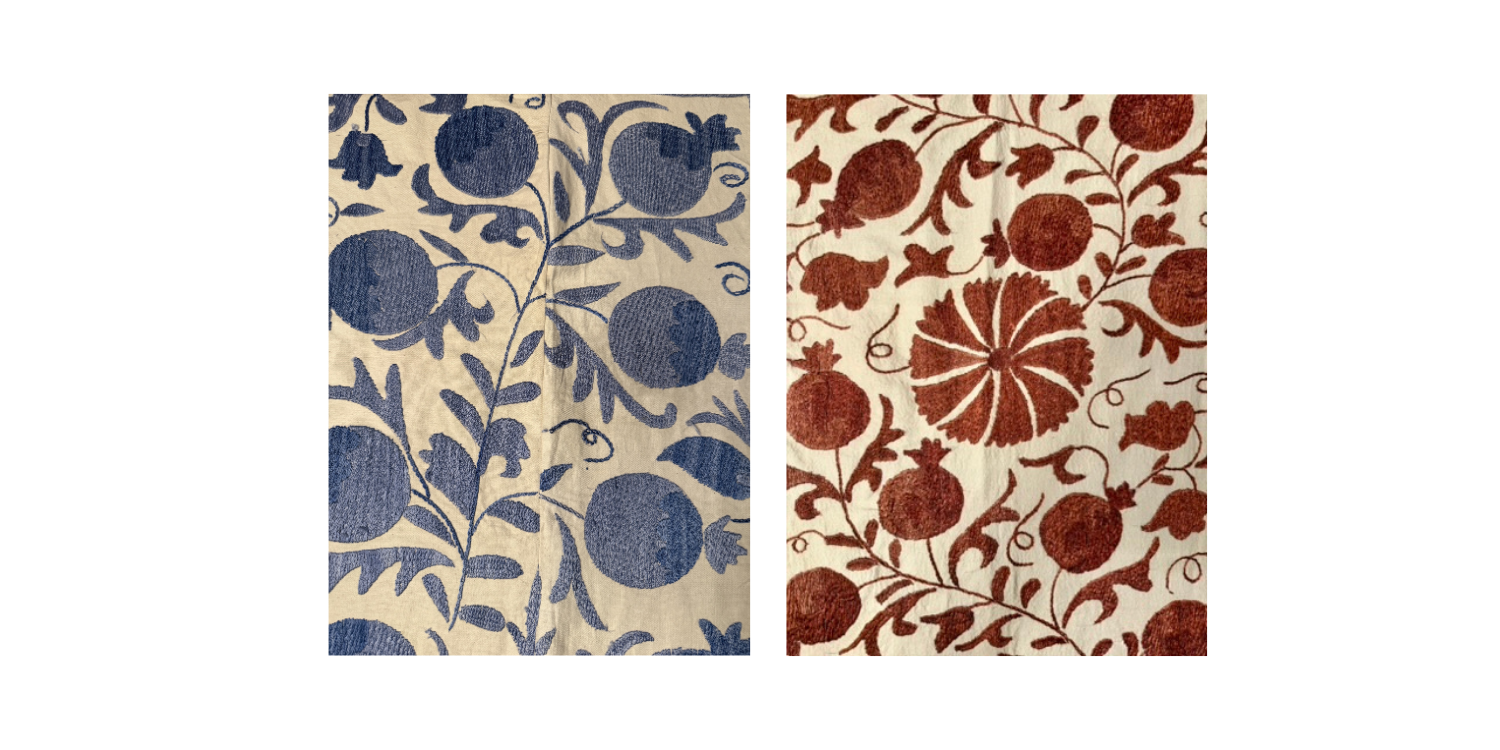
A few years later, it happened again - this time with a decadent, plum-colored suzani at The Cloth Shop in London. By the time I traveled to Uzbekistan in 2025, I was officially suzani-smitten. I’m still daydreaming about the one that got away: a mustard-and-cornflower, silk-on-silk wall hanging that I left behind in Samarkand.
Keep reading for my love letter to this iconic textile tradition, with practical tips for sourcing and styling your own suzanis.
What is a suzani?
A suzani is a type of embroidered textile, traditionally produced in Central Asia: Tajikistan, Kazakhstan, Afghanistan, and Uzbekistan. The term suzani is derived from the Persian word suzan, which means needle.
How were suzanis traditionally used?
For centuries, suzanis have been used in domestic interiors, from nomadic yurts to settled Uzbek and Tajik households in oasis cities like Bukhara and Samarkand.
Traditionally - and continuing today - suzanis are created as part of a bride’s dowry and brought into her new home upon marriage. It’s said that future mothers-in-law will often ask to take a peek at a young woman’s suzanis as a way to gauge whether she is a suitable match.
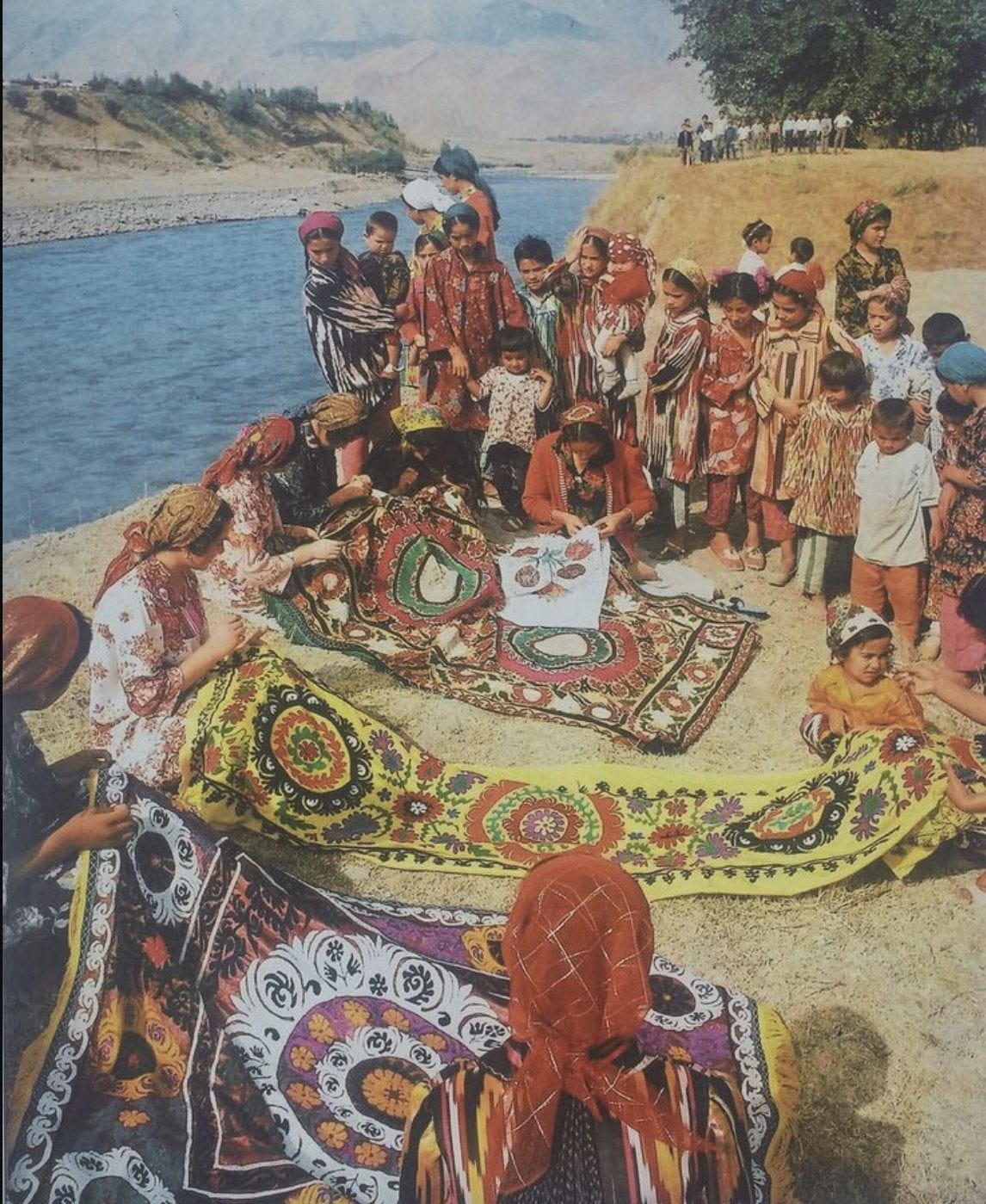
Starting in the late 19th and early 20th centuries, suzanis began taking on a life outside the home: as commercial objects, for sale in Central Asian bazaars and around the globe. In fact, in 1911, an American researcher returned from a visit to Turkestan, proud to have acquired an exquisite example of Bukhara-style embroidery - only to find that his friend had purchased an almost identical textile from a department store in Chicago.
This trend towards commercialization accelerated during Soviet rule in Central Asia, which began in the 1920s and persisted until the Soviet Union dissolved in 1991. Increasingly, suzanis were produced for sale via artels, or production cooperatives, often using commercially produced threads and more standardized designs. Though hand embroidery continued to dominate, some workshops - particularly later in the Soviet period - also introduced sewing machines.
What does a suzani’s design reveal about how, when and why it was made?
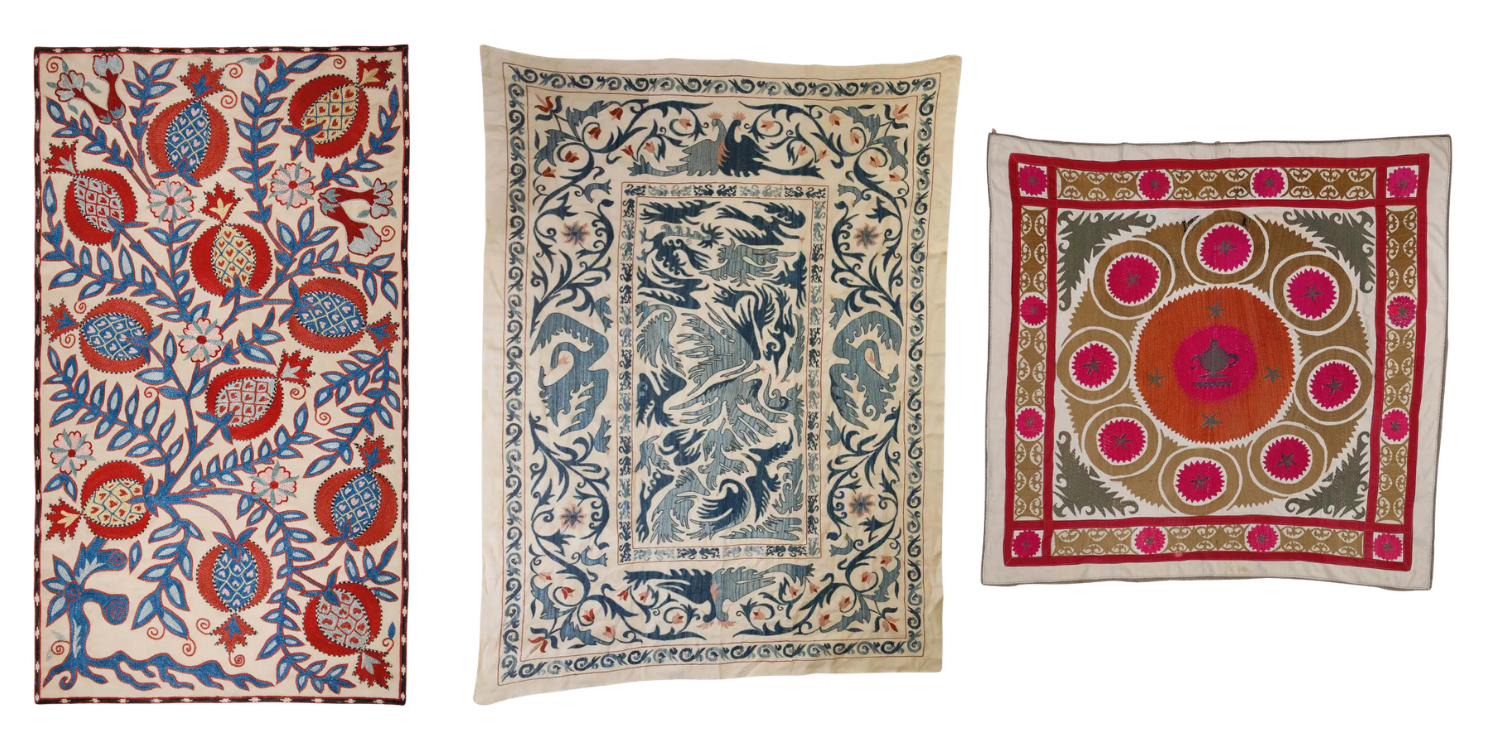
Motifs like pomegranates and birds reflect a suzani’s role as a marriage blanket. Suzanis are filled with spiritual symbolism: pomegranates for fertility, birds for happiness, teapots for hospitality, and more. And just as in American quilting traditions, it is often customary to leave a small section of a suzani intentionally unfinished - a subtle gesture meant to guard against the jealousy of the Evil Eye.
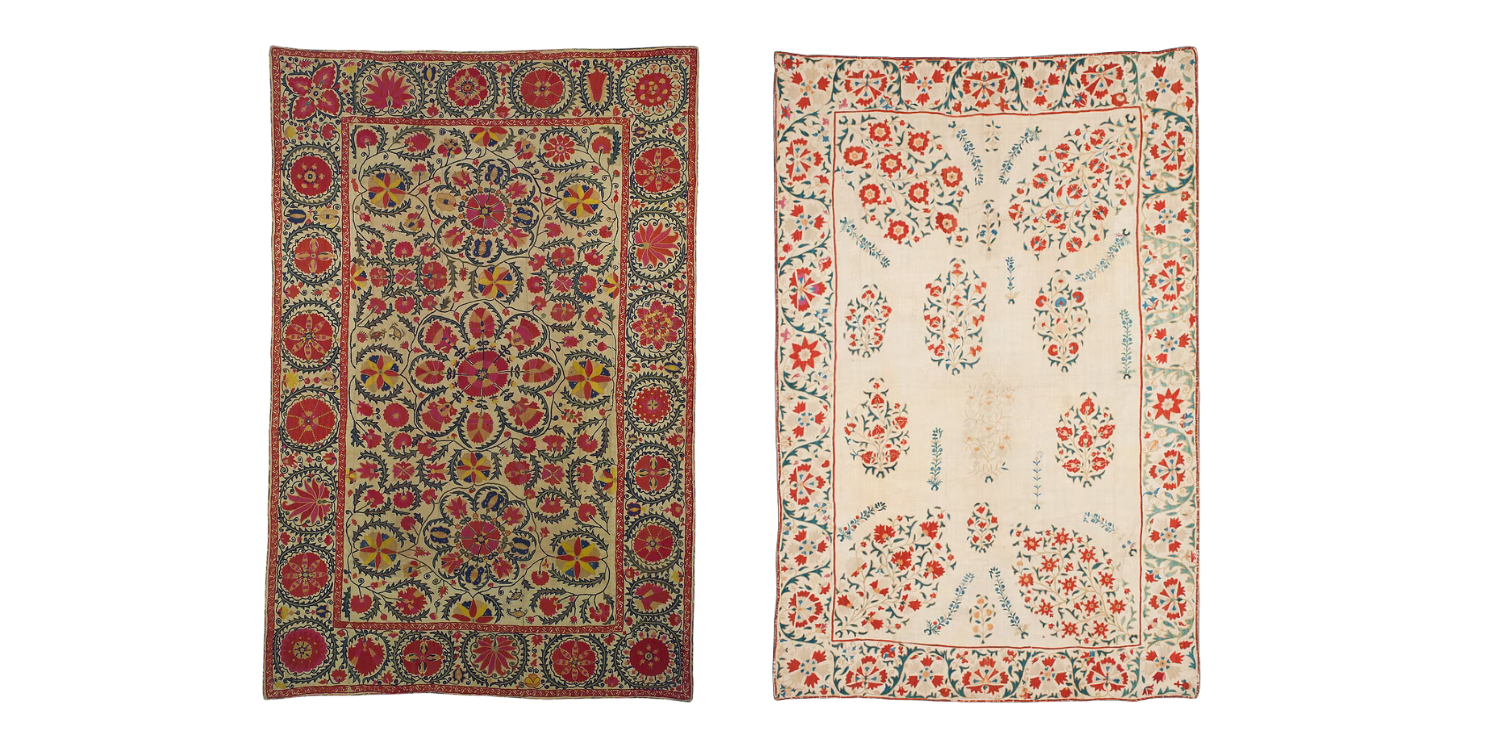
A suzani’s pattern often signals where it was made. While floral patterns are common, design motifs vary by geography. For example, suzanis from Bukhara are known for their large orange and magenta floral medallions with lush green vines, whereas suzanis from Nurata use more naturalistic floral motifs reminiscent of Mughal patterns.
Embroidering suzanis is a family affair. Most suzanis are made of multiple panels of cloth (most often cotton, sometimes silk) stitched together, rather than one continuous piece of cloth. This is so that multiple women, usually family members, can work on one suzani at the same time.
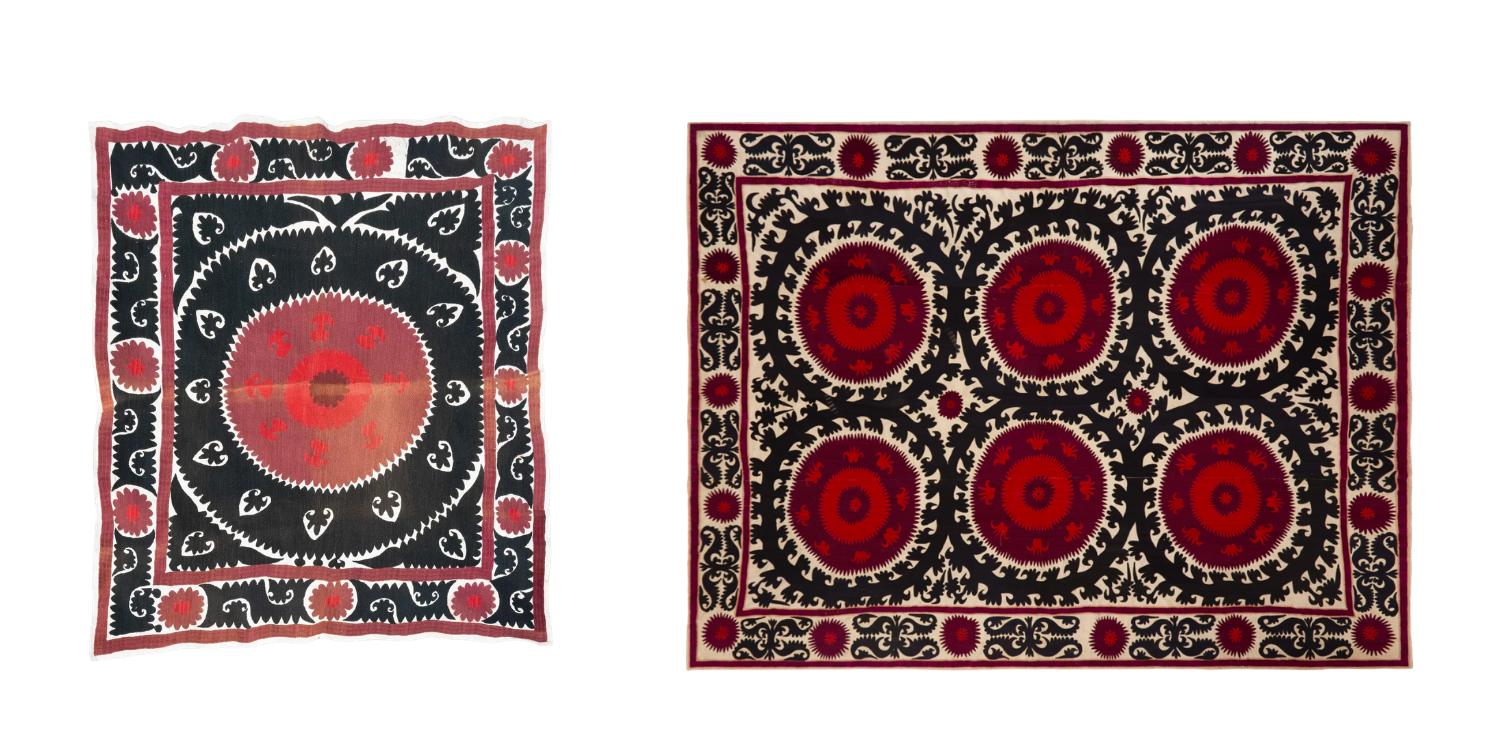
As suzanis became commoditized, their visual language evolved. In the late 19th and early 20th centuries, patterns grew more oversized and abstract, often dominated by bold red, black and white contrasts.
The prominence of deep black motifs suggests a shift towards commercially produced dyes, giving many mid-century suzanis a sharper, more graphic clarity than was typical of traditional natural vegetable dyes.
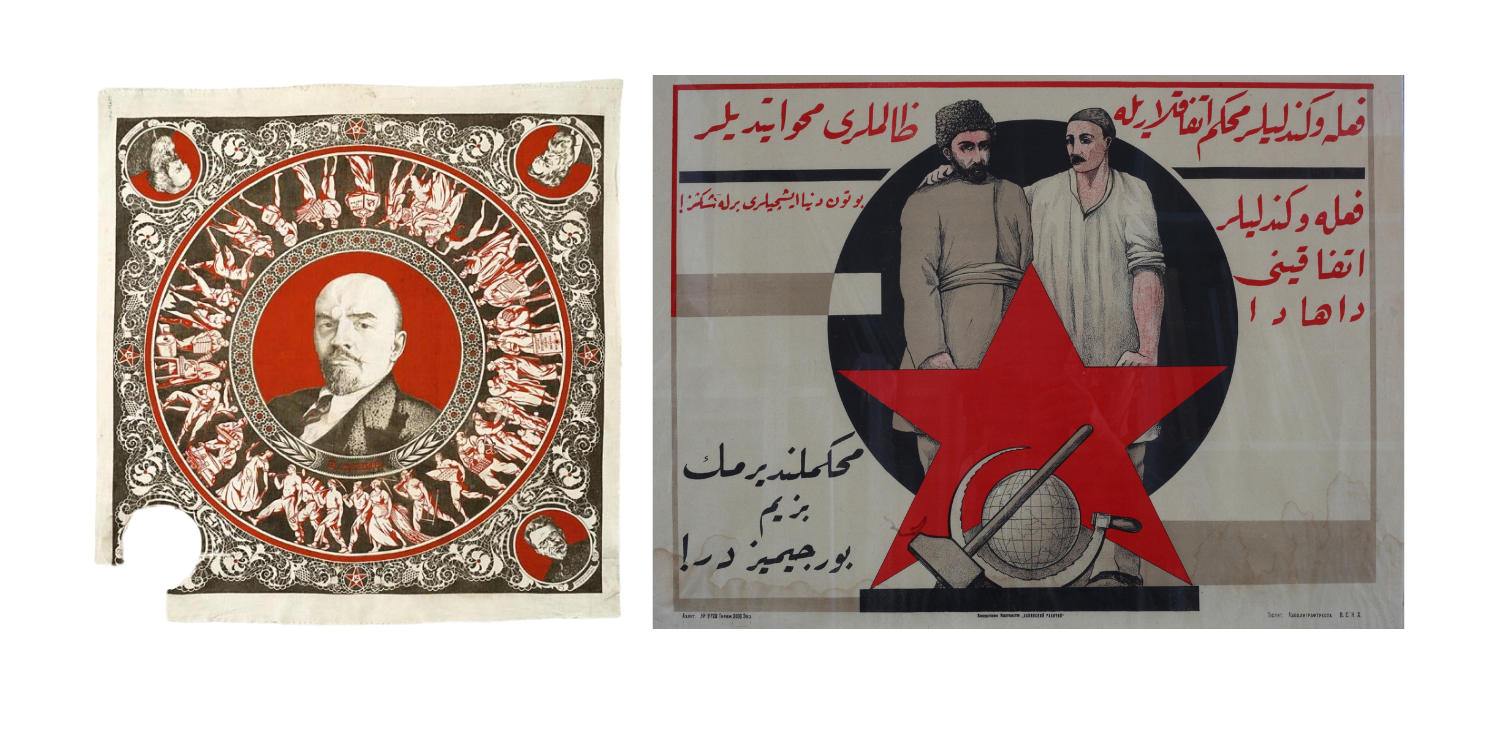
Personally, I was struck by how many Soviet-era suzanis echo the graphic qualities of Soviet propaganda posters: bold, dynamic lines, high-contrast color palettes, and little negative space.
What should I look for when sourcing suzanis?
Is the ground cloth cotton or silk? Suzanis are traditionally embroidered on simple undyed cotton cloth. Beginning in the 1880s, silk began to appear more frequently as a foundation cloth - though note that these suzanis tend to be both more expensive and less durable.
Are the dyes natural or synthetic? Historically, suzanis were made with silk floss colored with natural vegetable dyes, known for their warmth and complex variegation. More modern designs (notably, those with dominant black motifs) may use commercial synthetic dyes, which create high visual contrast and a more uniform presentation.
Is it handmade or machine-made? Even today, most suzanis on the market are hand-embroidered. To evaluate whether your design is handmade or machine-made, look at its back. Hand-embroidered pieces will show stitches of various lengths and sizes, while machine-made suzanis will have much more precise stitches with few (if any) imperfections.
How sophisticated is the pattern? The more sophisticated the design - in terms of pattern intricacy, depth of colors, and amount of negative space - the higher the price tag. You can snag simple designs with one or two colors for a few hundred bucks, while more advanced patterns can easily run into the thousands.
How will you use it? Suzanis come in a wide range of shapes and sizes, and it’s helpful to think through exactly how and where you’ll use it to choose the right size. Proportions are especially important for wall hangings and furniture upholstery projects. When in doubt, size up.
Where can I buy a suzani and how should I style it?
For high-impact wall hangings:
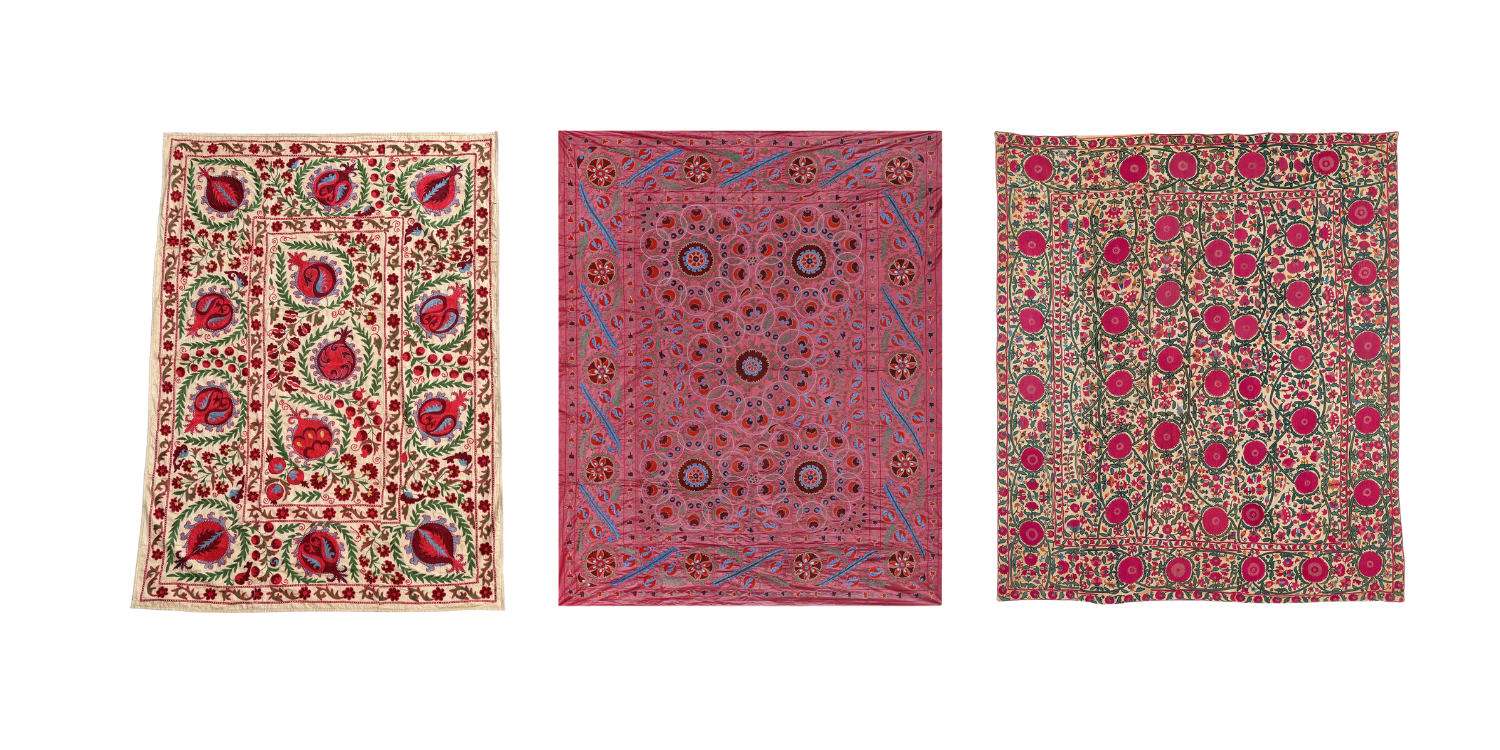
Think of these tapestries as statement art: dynamic compositions, vivid colors, and a scale that commands the room.
To toss over the back of a couch or the foot of the bed:
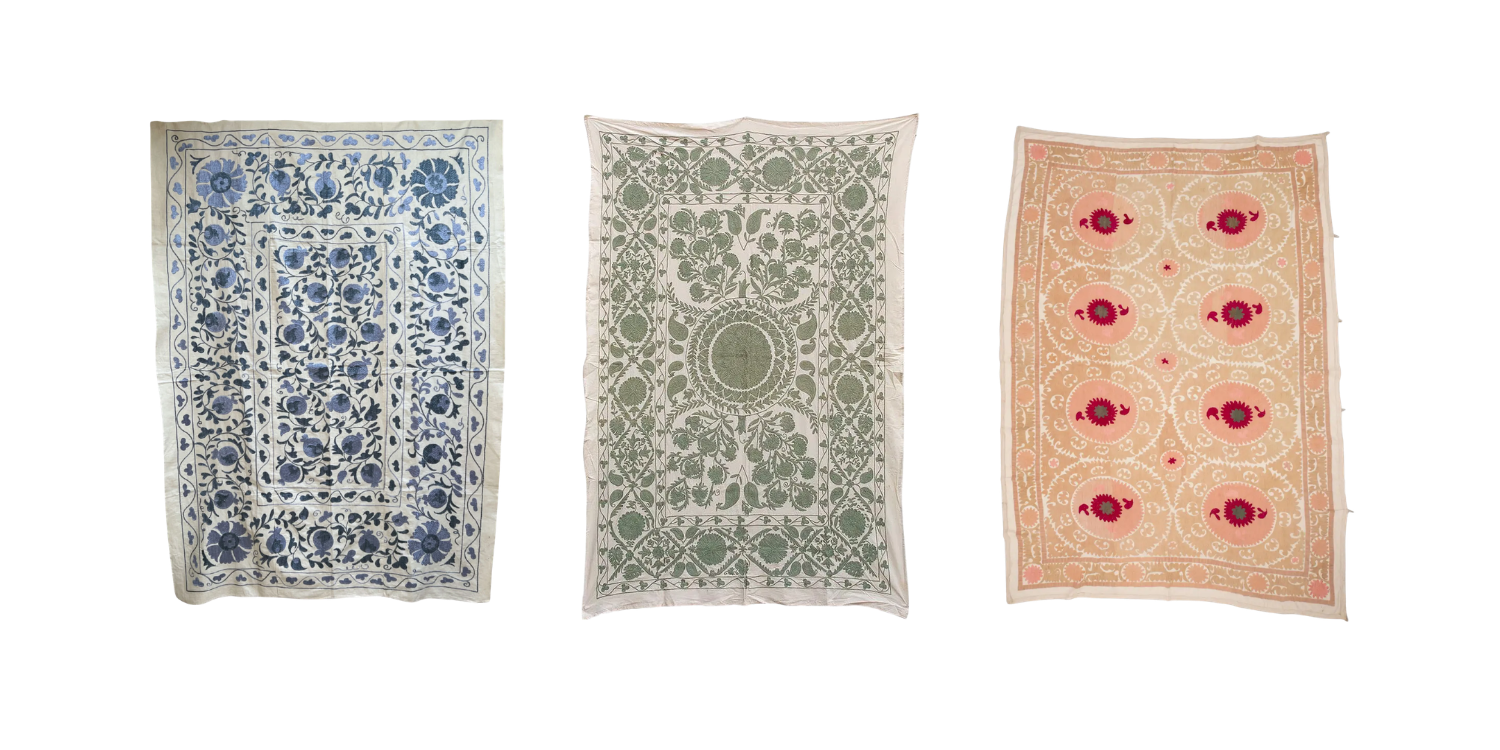
These are the pieces that you’ll want to snuggle up with every day - softer scale and more subdued color palettes, but still rich with detail.
To save yourself a trip to the upholsterer:
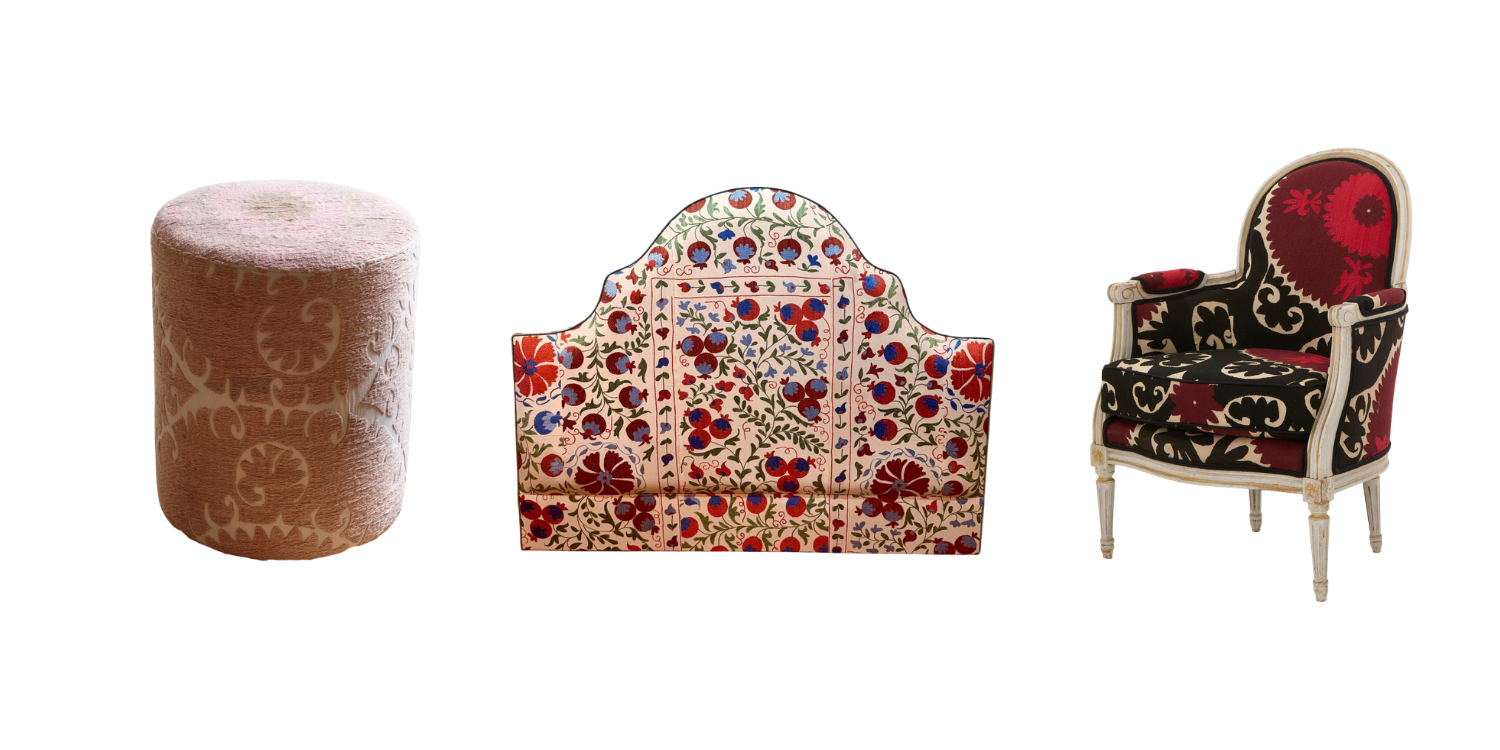
Suzani-upholstered furniture is a designer favorite for good reason.
Where can I learn more about suzanis?
For those eager to dive down the suzani rabbit hole, check out Susan Meller’s Silk and Cotton: Textiles from the Central Asia That Was and A guide to suzanis, courtesy of Christie’s.
For more Uzbekistan tips, tricks & recs — including design-forward city guides for Tashkent, Bukhara, and Samarkand — visit Armchair-Traveler.com.