

I spent 3 hours with Raqib Shaw’s 100-foot painting Paradise Lost
The classic art history assignment that changed my brain chemistry

This post may get cut off in your email. For the best experience, read it in your browser.
I flash my membership card to the guard outside; he waves me in without a word. It’s 10:01am, the start of members-only hours at the Art Institute of Chicago on a foggy summer Sunday.
The atrium is practically empty: a gallery guard making her way to her post, a fellow member scurrying off to be first in line for the newest exhibition (drawings by Willem de Kooning), and me, walking purposefully towards the Alsdorf Galleries.
Today, I’ve given myself an assignment: to spend 3 uninterrupted hours with a single work of art.
I was inspired by Harvard professor Jennifer Roberts, who famously assigns this same task to her art history students: choose one work of art, then spend a “painfully long” time looking at it - before cracking open a book or falling down a Google rabbit hole.
I was intrigued: looking at anything for 3 hours felt excessive, tedious, even mind-numbing - until I saw my weekly screen time report. If I could spend more than 4 hours a day mindlessly scrolling the tiny computer in my pocket, then of course I, a self-professed art enthusiast, could devote 3 hours to looking at a piece of art.
I selected the object of my attention with care: visually, I wanted a work with scale, with depth, with exquisite details that I could lose myself in. I also wanted a work that was alive with narrative energy, with a distinctive point of view.


The answer was obvious: Raqib Shaw’s Paradise Lost, a monumental painting more than 20 years in the making, that stretches more than 100 feet wide and is currently installed in the Asian art galleries at the Art Institute of Chicago.
Affectionately dubbed “The Big Painting” by in-the-know Chicagoans, I’d seen it on previous visits: it’s impossible to miss, hung in the museum’s main thoroughfare connecting the historic Allerton Building and the Modern Wing. I’d noticed how museum patrons flocked to it like moths to a flame; it seemed that everyone, from the very young (“Mommy, those faces look SPOOKY!”) to the very old (“I don’t mean to be a psychologist about this but…”) had opinions.
It was the ultimate conversation piece.
10:03am: Me, Paradise Lost, and an almost-empty gallery


The gallery is practically empty: just me, another onlooker or two, and a guard with a sweet Southern drawl who says “It’s gonna be a good day today” every time one of her colleagues walks past. I snap a selfie and start the timer on my watch. I’ve positioned myself on the opposite side of the gallery, probably 50 feet away from Paradise Lost, so I can see the entire 100-foot painting at once.
I don’t last long here: the painting’s details beckon to me to get closer. Within seconds, my nose is practically pressed up against the panels.
10:07am: Into the glittering, menacing woods


I’m stationed on the left side of the painting, completely hypnotized by its textures: towering evergreen trees rendered with delicate, cloisonné-like tracery; menacing serpents coiled on branches, with scales of glittering rhinestones; and a matte, cloudy sky that adds to the dreamlike effect.
I can’t quite wrap my head around how it was made. I’ll later learn that Shaw’s signature technique involves applying an acrylic liner on gesso to create the golden silhouettes, then filling them in with automobile enamel paints using fine-tipped syringes and porcupine quills.
10:21am: Fires, floods and FOMO


I’ve made my way to the painting’s apocalyptic central panels, where civilization seems to crumble: an enormous, Greco-Roman-style structure disintegrates before our very eyes, debris swirls violently in raging floodwaters, and mythical and worldly creatures drown and fight and struggle to stay afloat.
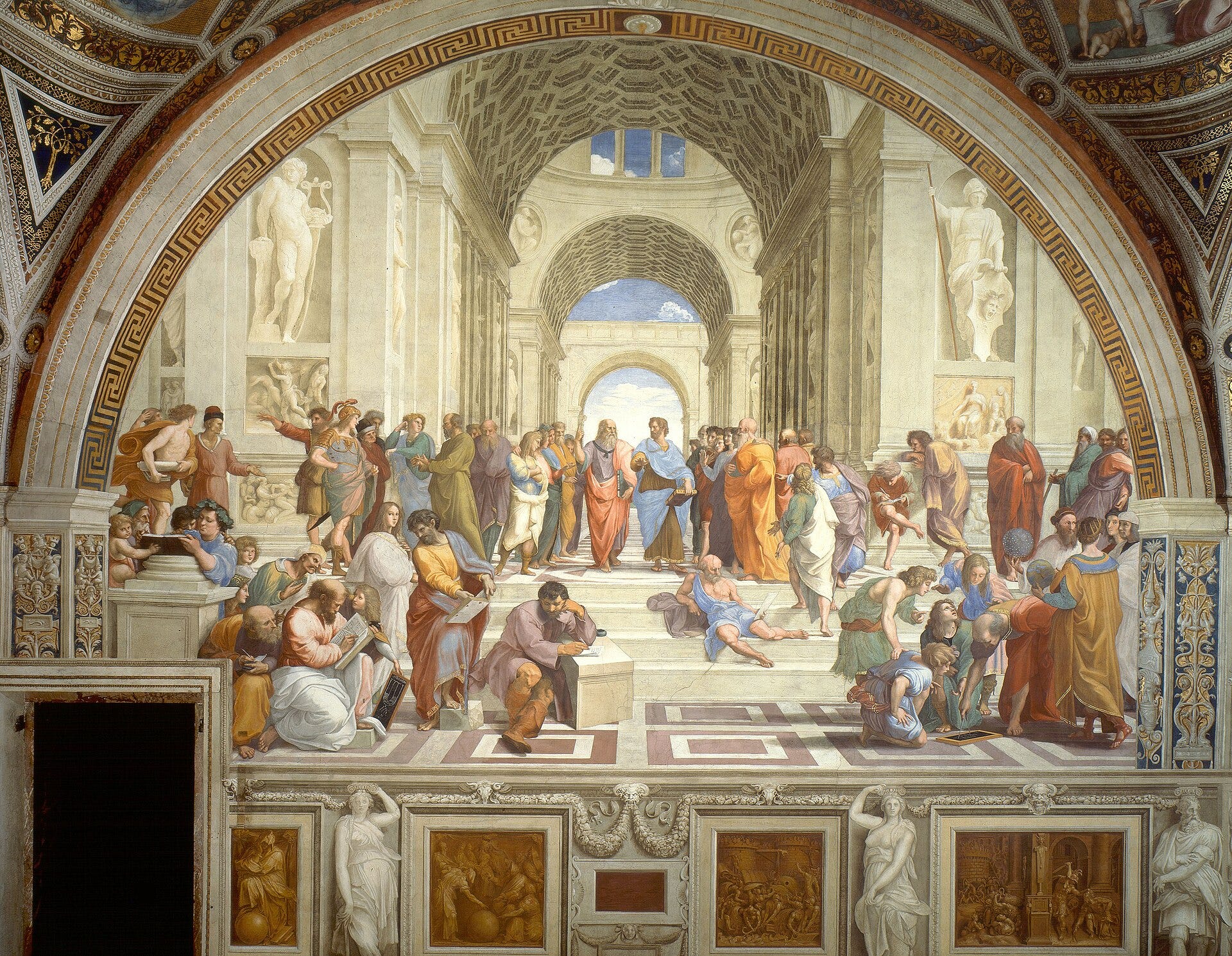
Something about the composition reminds me of Raphael’s School of Athens fresco; I think it’s the way the U-shaped structure contains the narrative, symmetry signaling to the viewer where the scene starts and finishes. The churning flood waters, though, are purely Biblical; the rage of a wrathful God pulsates as solid stone arches explode into tiny pieces.
I crane my neck to get a better glimpse of the Tower of Babel, which looms a good 4-feet above my head. I’m struck by a peculiar sense of FOMO: frustrated that I can’t get closer, and convinced that there is an easter egg I might be missing.
10:32am: The second lap begins


I start my second lap. Different things jump out at me this time around: the baboons’ red rhinestone eyes that seem to follow you, no matter where you’re standing; the artist’s Jack Russell Terrier, Mr C, who appears throughout; the demons with snarling jaws for genitals (reminiscent of Picasso’s vagina dentata imagery, which I first encountered in a Spanish-language art history class where it was clear by our giggles that my best friend and I were the only ones who understood what the professor was saying).
The gallery is still quiet, which makes the ambient noise more pronounced: the South Shore trains chugging beneath the gallery floor, a janitor rolling an industrial-sized garbage can from one wing to the next.
10:49am: The calm before the storm
I hear the pitter patter of little feet before I see them: two young girls in smocked sundresses, perhaps 4 and 5, eager to show their parents every last detail. “There’s FIRE, Mommy!” “Papa, come see the waves over here!” The bejeweled serpents and cotton candy-colored skies delight them; the painting’s inherent violence seems to go right over their tiny heads.
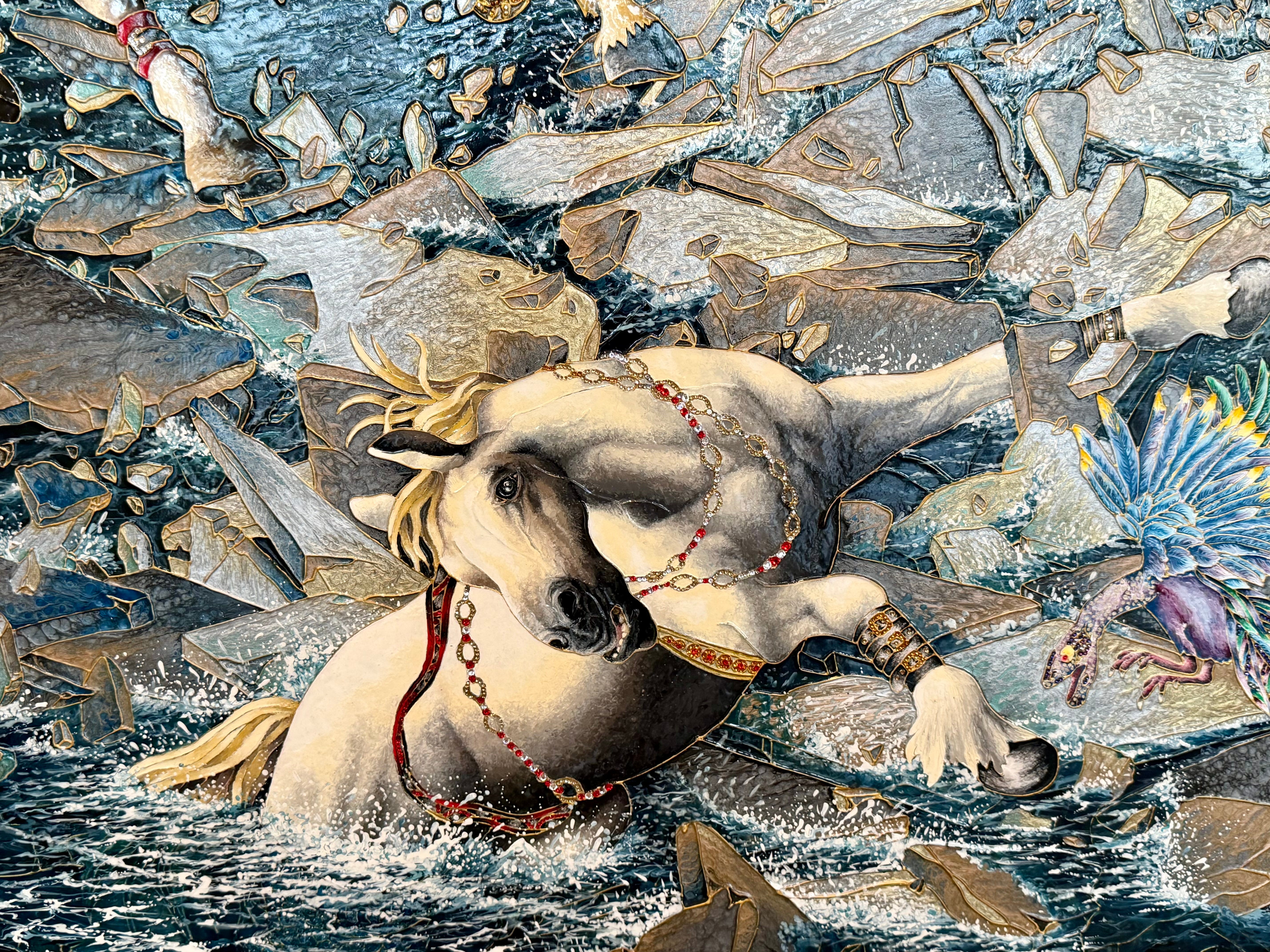
I soak up the last minutes of relative quiet before the museum opens to the masses at 11am. My eyes linger on the central tableau again, noticing the abject terror in the eyes of a drowning horse, muscles tense as it flails in the water, trying to find a solid grip. My eyes well with tears before I’ve even fully processed the scene.
It reminds me of the wailing, writhing horse in Picasso’s Guernica.
11:10am: One hour down, two to go
I look at my watch. How has an hour already passed?


I squat to get a better look at a detail that I noticed on my first lap: a brightly-colored square, floating half-submerged in the stormy sea. Bottles of champagne and a lavish picnic basket bob nearby.
Up close, I can see that the square is actually a book. When I squint, I realize that it’s not just a book - it’s an auction catalog, with “Sotheby’s” emblazoned on the front.
At this very moment, I hear a young boy calling out, pointing at the painting, “Dad, I think that’s $2M dollars!”
11:27am: Taking a step back
I step back to look at the painting from about 20 feet away and feel like I’m resurfacing from an intense, ultra-vivid dream. I clock that the gallery is slowly filling up around me, though quietly enough that it hasn’t disrupted my reverie.


For the first time, my eye is drawn to the other artworks on display; I learn later that the entire gallery has been reinstalled to place Paradise Lost in conversation with specific treasures from the Art Institute’s South Asian collection.
It’s fitting that this bronze statue of Shiva as Lord of the Dance seems to preside over the very center of the painting: Shiva’s cosmic dance sets in motion the rhythms of life and death that Paradise Lost grapples with writ large.
11:38am: Tired eyes
I blink once, twice, three times: my contact lenses are glued to my eyes, which are dry and strained from my forensic inspection.


The painting’s energy travels differently at a distance: the dozens of deer and jungle cats that spar in the forest feel more like a throbbing stampede from afar. And yet even when the more grotesque details are obscured - at a distance, you can’t really tell that the baboons in the cherry blossom tree are devouring innards - the sickly sweet sky still signals the underlying violence.
11:47am: A heroic rescue
The din of the crowd has officially become a dull roar. I audibly gasp as a mom rescues her 4- or 5-year-old son from falling backwards into the painting as he poses for a photo. Seconds later, the guard chimes in with a pointed reminder: “The museum has a no touching policy.”
12:02pm: Playing impromptu tour guide
I’m running out of pages in my tiny notebook. An older man with kind eyes approaches and asks me if I’m taking notes. When I nod, he asks me to help him find two of the Greek mythology references called out in the exhibition labels. I point to where the artist has portrayed himself as Narcissus - gazing over the edge of a waterfall - and Icarus, whose wings disintegrate in the upper right corner.
12:35pm: Blue thumbprints
I sit down on a bench; my feet and eyes and brain are fading fast. I look down at my hands, which are now streaked with blue ink from the leaky pen I’ve been using to take notes. I curse myself for not bringing a better pen. As someone who is annoyingly particular about writing instruments, I definitely should have known better.
12:47pm: “Avatar meets Lord of the Rings meets Game of Thrones”


From my perch, I’m perfectly positioned to eavesdrop. I’m struck by how many pop culture references Paradise Lost inspires: “The peacock men are just like the blue guys from Avatar!” “It’s like Lord of the Rings-meets-Game of Thrones.” “Is that creature wearing Doc Martens?”
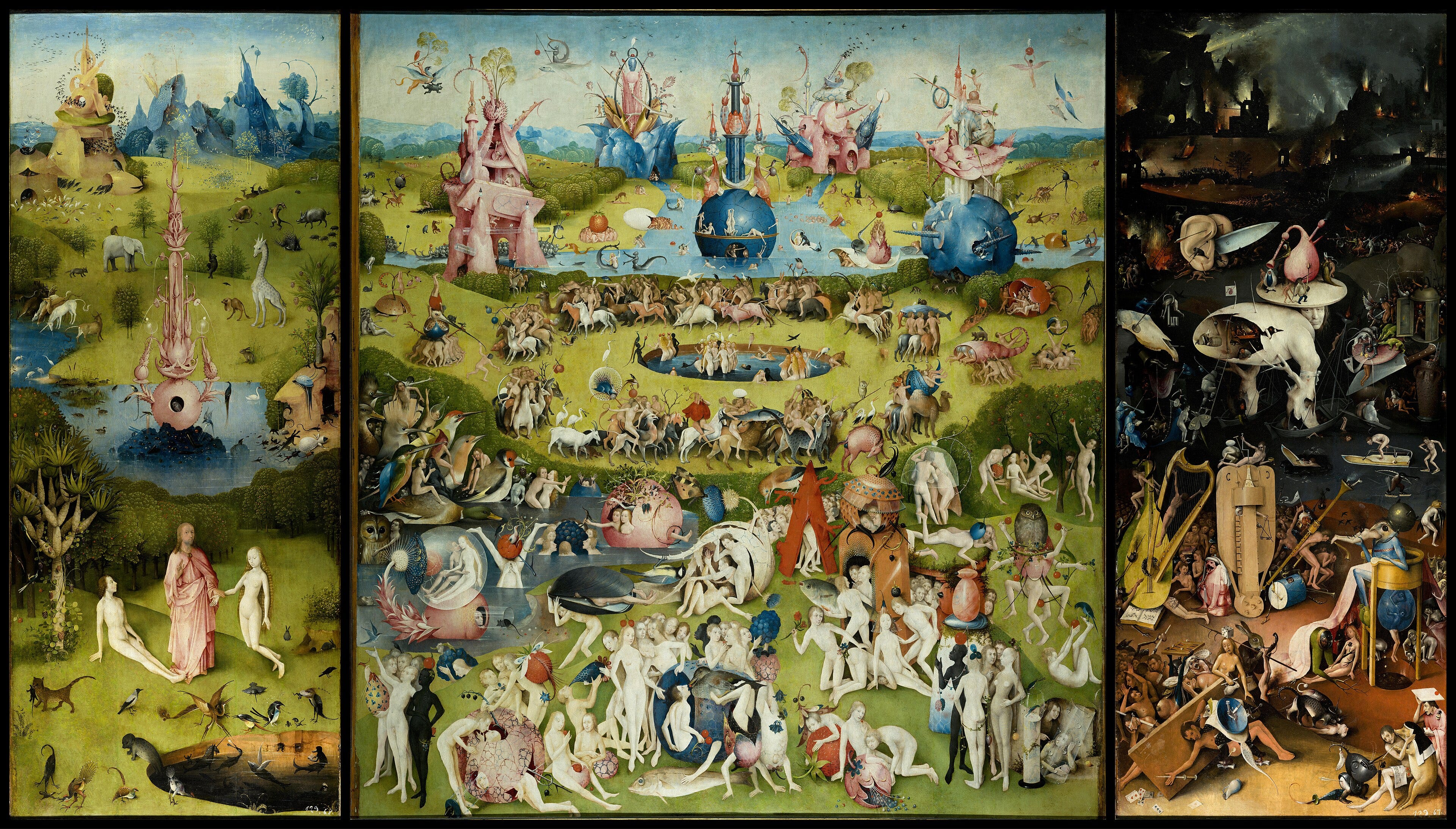
There’s less commentary on the art historical references, but those are also ever-present; the one I keep coming back to is Hieronymus Bosch’s The Garden of Earthly Delights, which Shaw has explicitly cited as the inspiration for some of his earliest works.
1:02pm: T-1 minute


Incredibly, I’ve just noticed something new: the luminous turquoise color of the walls in the white temple. I’m not sure how I missed that magnificent color before - I’d spent a good 5 minutes inspecting the carved detailing on the temple’s facade, trying to decide if it skewed more Mughal or Moorish - but now I can’t unsee it. I must snap a photo before I leave.
1:03pm: Stick a fork in me, I’m done
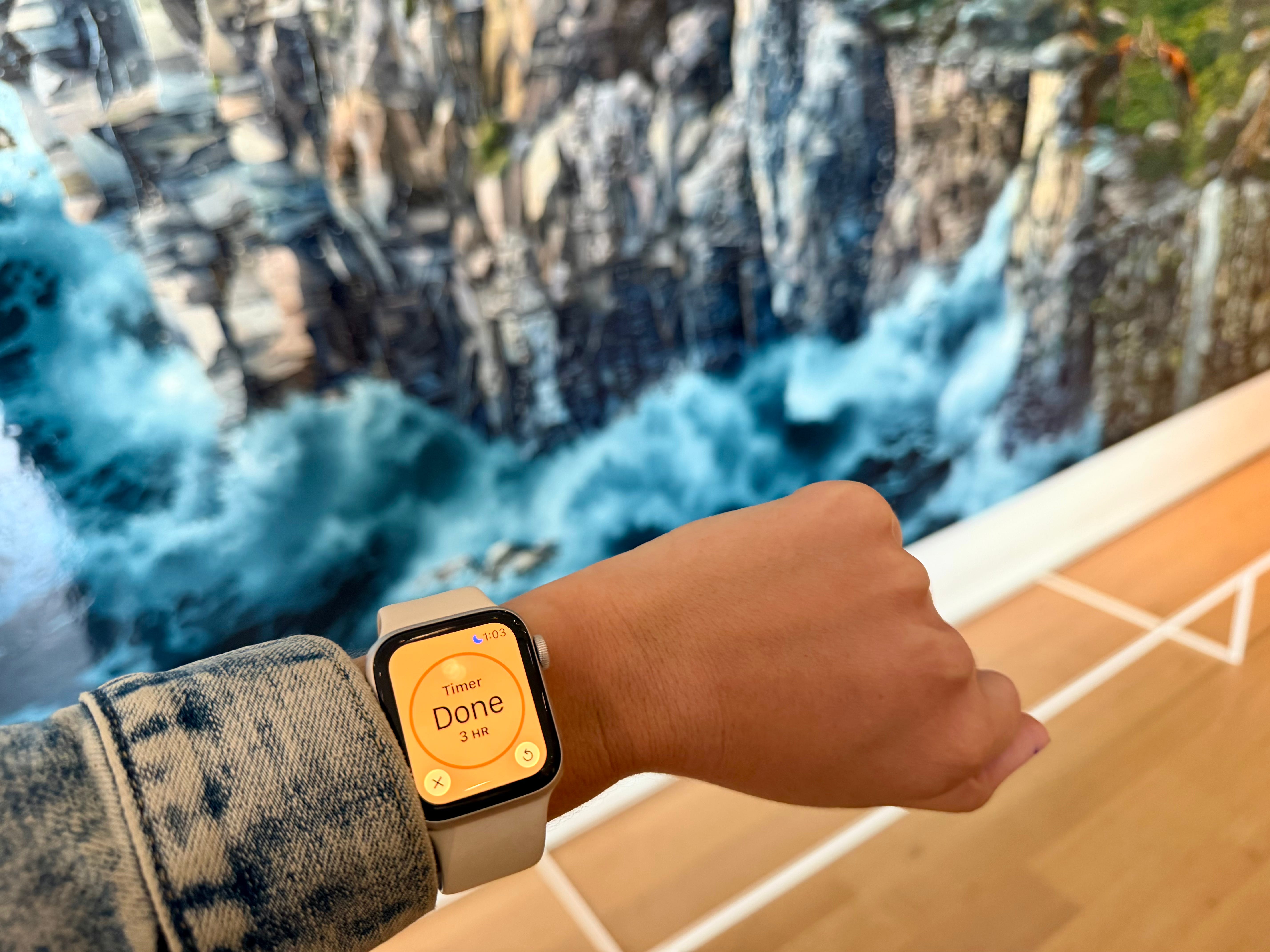
My watch vibrates as the screen lights up in neon orange: “Done!” I snap a photo before dismissing it. My notebook is full (my chicken scratch scrawl bleeds onto the back cover), as is my camera roll (I’ve taken 100+ photos in the last 3 hours).
One last glance at Paradise Lost, and I’m off. My hands are still covered in ink.