

Design Diary: Uzbekistan
A love letter to my favorite Uzbek design discoveries: sumptuous silks, stunning suzanis, pakhta-patterned china, and more

Welcome to Design Diaries by Armchair Traveler — a series that paints immersive portraits of destinations through their visual culture. Each entry explores the creative traditions — art, design, architecture, interiors, fashion, and beyond — that define a sense of place.
Welcome to World/Space/Other
My sister and I got a lot of funny looks when we told people we were headed to Uzbekistan. Most had never heard of it and definitely couldn’t place it on a map. As the teller at my local credit union said, after a long pause “… you’re gonna have to spell that for me.”
Even our travel insurance company seemed confused: when I booked our policy, Uzbekistan wasn’t even an option in the country dropdown menu, leaving me with no other choice than to select “World/Space/Other.”
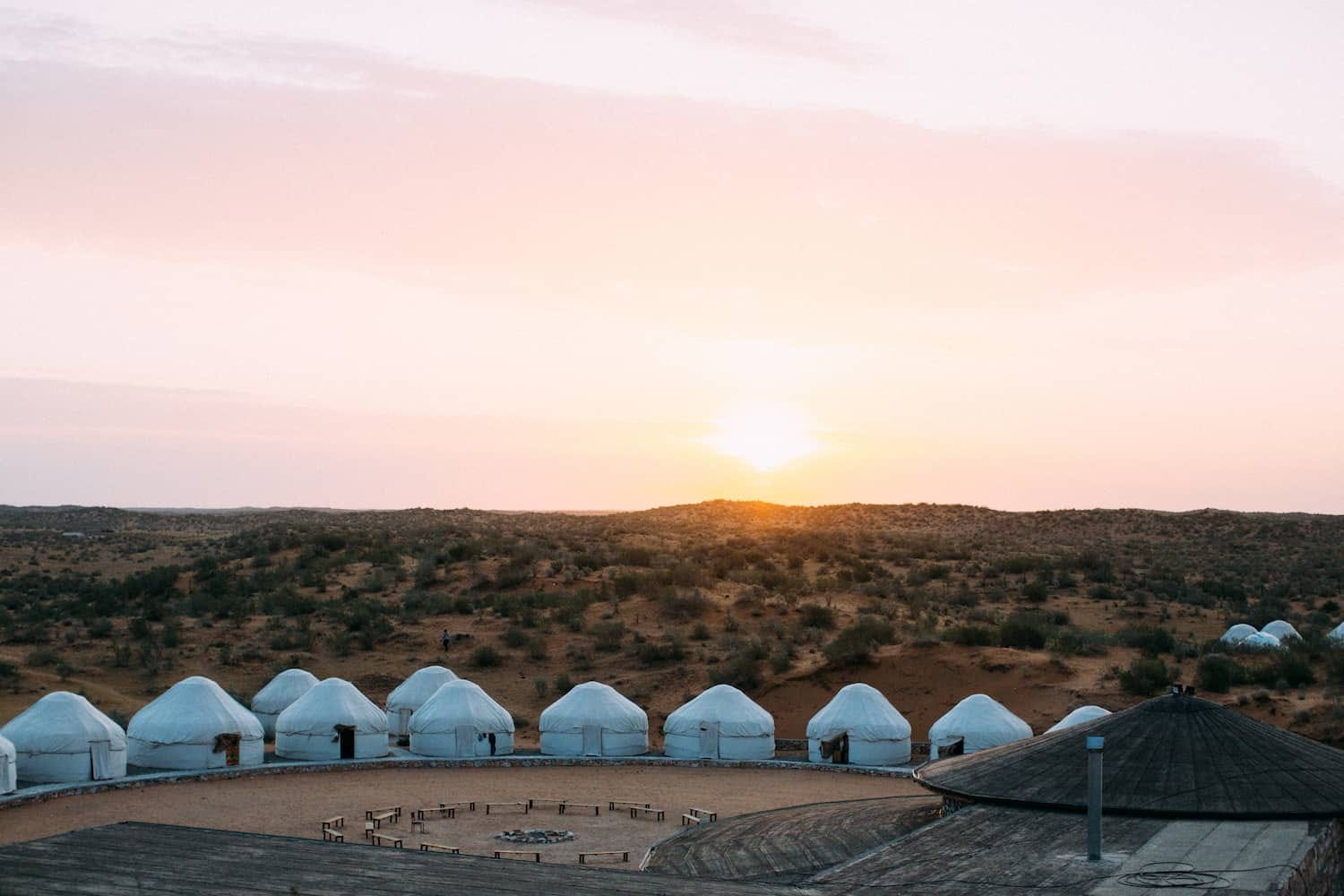
When we finally landed in Tashkent after a bruising 24 hour journey, we certainly felt a world away. That feeling only intensified over the course of our 10-day journey, which we spent:
Gawking at towering minarets and sprawling madrasas, finished with thousands of ornate blue, teal and white tiles that glittered in the intense Central Asian sun
Stargazing to the dulcet tones of an Uzbek dutar player, a crackling bonfire and a rowdy group of tipsy Russians, at a yurt camp in the Kyzylkum Desert
Drooling over the wares in local markets and artists’ studios: sharply-detailed, Persian-style miniature paintings; vibrant ikat textiles in silk, cotton and velvet; handmade ceramics finished with ancient glazing and firing techniques; and even Soviet-era memorabilia (think medals, propaganda posters, and busts of prominent comrades)
As of this writing, Uzbekistan still feels like a well-kept secret for only the most in-the-know travelers. But I have a hunch that it won’t fly under the radar for much longer, as it has all the makings of a major tourist destination: a rich, layered history; a burgeoning contemporary art and design scene; and modern amenities like ubiquitous WiFi and a high-speed rail connecting Tashkent, Bukhara and Samarkand.
The musings that follow are part Uzbekistan design diary, part love letter to the locals and their warm brand of hospitality. As my sister and I said as we boarded our flight to Tashkent, “Get in loser, we’re going to Uzbekistan.”
On first impressions
We were practically delusional by the time we touched down in Tashkent around 1 a.m. local time, after a grueling day in transit. We squinted in the airport’s fluorescent lights, followed a series of winding hallways to immigration, and waited anxiously, visas and passports in hand, for the next available agent.
An hour later, we were happily ensconced in our hotel in central Tashkent, texting our loved ones that we’d arrived and preparing to sleep for as long as our jet-lagged bodies would allow. It all felt surprisingly… normal? Not exactly the “World/Space/Other” we’d been primed to expect.
On the local fashion trends
On our first evening in Tashkent, we ate dinner at an outdoor cafe just steps from the state opera house. As luck would have it, throughout dinner we were treated to an informal fashion show as patrons made their way to that night’s performance.
We were instantly impressed: the women were impossibly elegant, in chic patterned caftans (often in Uzbekistan’s signature ikat fabrics) and beaded tunics with matching pants and hijabs. The men were equally put-together, in smart sport coats and collared shirts.
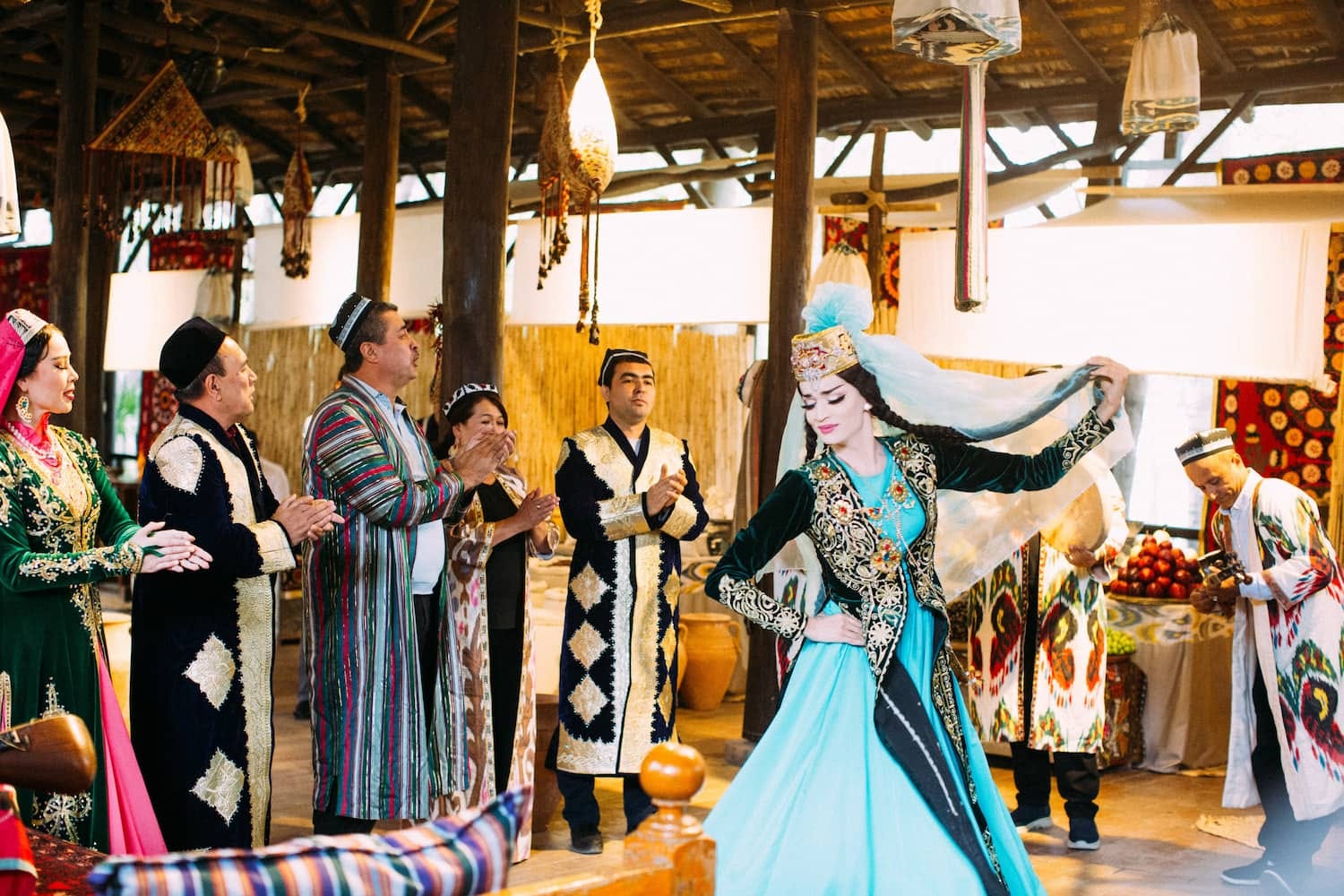
As we traveled throughout the country, it became clear that this wasn’t just an opera night phenomenon: everywhere we went, locals of all ages were stylishly dressed and beautifully groomed (often with full faces of makeup and elaborate nail art).
This trend proved to be true even in the countryside: we met a dapper gentleman in a full blazer and button-down walking through the fields with his donkey on the outskirts of a remote mountain village.
On suzanis
Suzanis have long been a staple textile in interior design circles, but their roots in Central Asian culture are perhaps lesser known. As our guide explained, suzanis are traditional marriage blankets, embroidered by young brides-to-be and presented to their husbands on their wedding day as a symbol of their two families coming together.
Even today, courting rituals in Uzbekistan are a family affair: when a young woman is of age to marry, potential suitors and their parents will visit her family home to assess the match. It’s not uncommon that future mothers-in-law will ask to take a peek at the young woman’s suzanis during these visits, to gauge her level of skill and commitment to her craft.
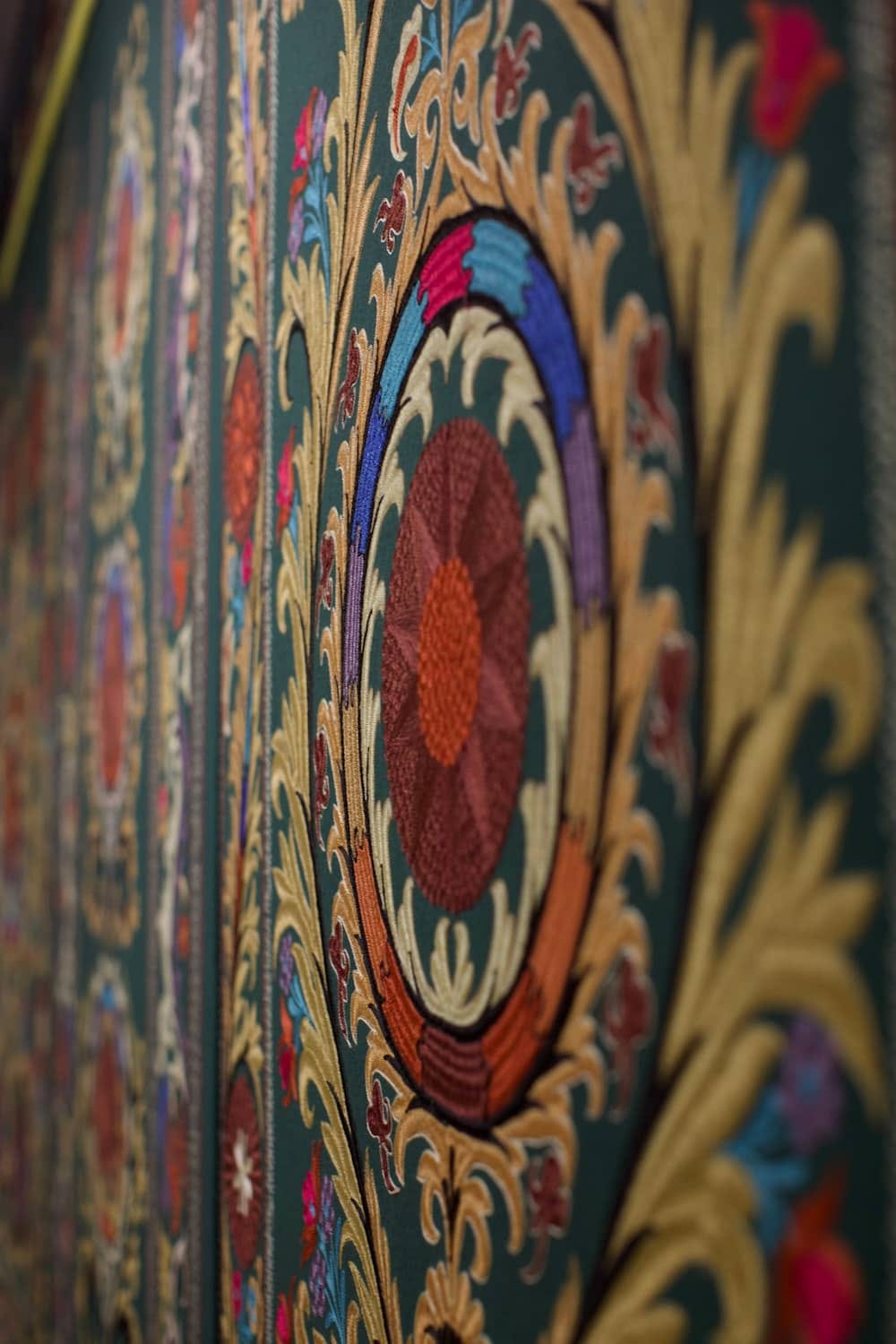
Not all suzanis are created equal; options range from simple cotton textiles embroidered in a single color, to opulent silks embroidered in intricate flywheel patterns. We found the highest-quality selections at the markets on the grounds of Sitorai Mohi-Hosa Palace outside of Bukhara and the Handicraft Center in Samarkand (a historic caravanserai, or inn for travelers, now converted into artists’ studios and shops).
On ancient & modern worlds colliding
Uzbekistan is a country of contrasts, where the tension between old and new is ever present. Case in point: we were treated to a behind-the-scenes tour of a carpet dealer’s showroom, where our host introduced us to the master weavers who knelt at their looms, painstakingly tying knot after knot using age-old techniques and traditional patterns.
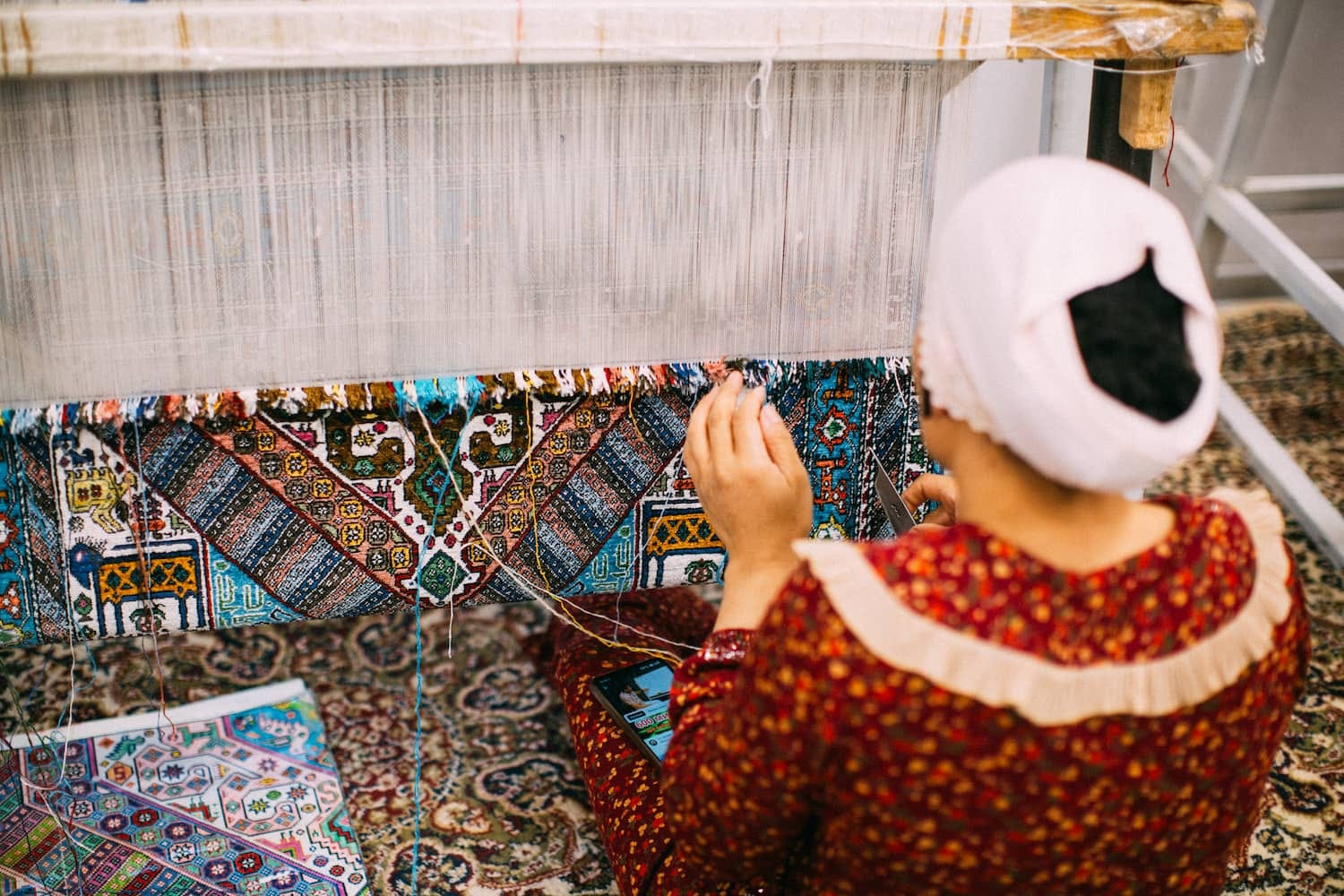
It was clear from this demonstration that the art of carpet weaving is, in most respects, the same as it was hundreds of years ago. The only exception? Many of the weavers had their smartphones propped up on their looms, so they could watch TikTok videos while they worked.
On lasting Soviet influence
In the scheme of Uzbekistan’s history – scholars believe its lands have been occupied continuously since the first millennium BC – the Soviet Union’s occupation from 1920 to 1991 feels like a blip on the historic radar. But even 30+ years post-occupation, we saw vestiges of the Soviet era all over Uzbekistan, like:
The ultramodern Tashkent metro system, where the Kosmonavtlar station pays homage to Soviet astronauts and Pushkin station honors Russian poet Alexander Pushkin
Market stalls selling Soviet relics (like military medals, dusty china tea sets and even rugs depicting unidentified comrades)
Restaurants that only offered Russian language menus (Google translate came in very handy in those situations)
Opera performances subtitled in Russian, attended by oligarchs and their girlfriends (easy to spot based on their ultra-high-end designer handbags)
According to our guide, among older Uzbeks, the jury is still out on whether the Soviet occupation was ultimately a good thing or a bad thing. Were the investments in improved education, women’s rights, and economic stability a worthy tradeoff for broad religious oppression and a loss of national sovereignty? The truth likely lies somewhere in between.
On food culture & tapchans
Traditional Uzbek food is, in a word, hearty. We began nearly every meal with a spread of small shared plates: eggplant salad tossed with dill; massive, circular loaves of bread; cold noodles; and sliced tomatoes and cucumbers, all served on pakhta (cotton) patterned blue and white china.
Main courses nearly always involved a combination of meats, vegetables and grains: think enormous flaky pastries stuffed with tender shredded beef (samsas); rich stews laden with melt-in-your-mouth lamb, carrots and potatoes; and, of course, plov – the Uzbek national dish, a pilaf most often made with lamb or mutton and vegetables, and finished with raisins for a touch of sweetness. Dessert was typically a bit lighter and not overly sweet: usually ripe melon or light wafers.
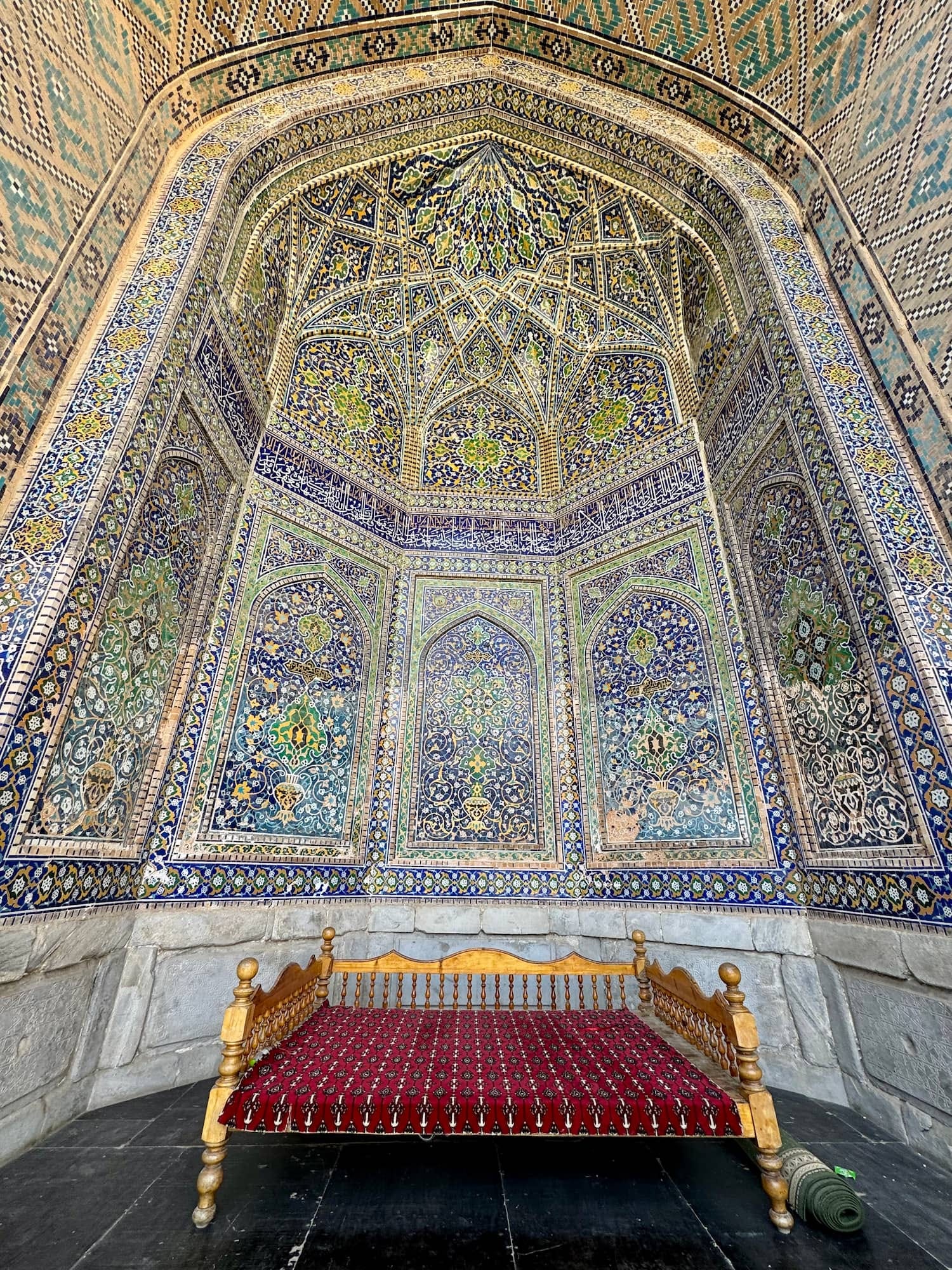
Our favorite off-the-menu design discovery? Tapchans, outdoor wooden platforms about the size of a queen bed, with a low table in the center and cushions all around (or, as we less eloquently called them, bed-tables). Eating on a tapchan feels both indulgent and practical: all the comforts of eating in bed, minus the crumbs in your sheets.
On Uzbek hospitality
The Uzbek people are utterly warm and welcoming: quick to offer a smile, a cup of tea, and perhaps even a personal invitation to their homes in the Fergana Valley. But perhaps no gesture is more reflective of their gentle, peaceful culture than the standard Uzbek greeting (which we saw our guide do dozens of times over the course of our trip): a bow of the head with a hand over the heart, as a show of respect and deference to the other.
On family-friendly nightlife
When the sun goes down, local families take to the streets for literal fun and games (think bounce houses, kiddie cars and carnival games). It was so refreshing to see people of all ages out and about after dark: young couples dining at sidewalk cafes, kids playing pickup soccer in narrow alleyways, and shopkeepers negotiating final deals before they closed down for the day.
Even more refreshing? How safe we felt, as two young-ish women, walking the streets alone at night.
On the shopping scene
It’s simple, really: Uzbekistan is a shopper’s paradise, especially for art and design lovers. Whether you’re in the market for rugs, ceramics, paintings, textiles (suzanis, ikats and silks, oh my!), leather goods, or even Soviet-era antiques – you’re in luck.
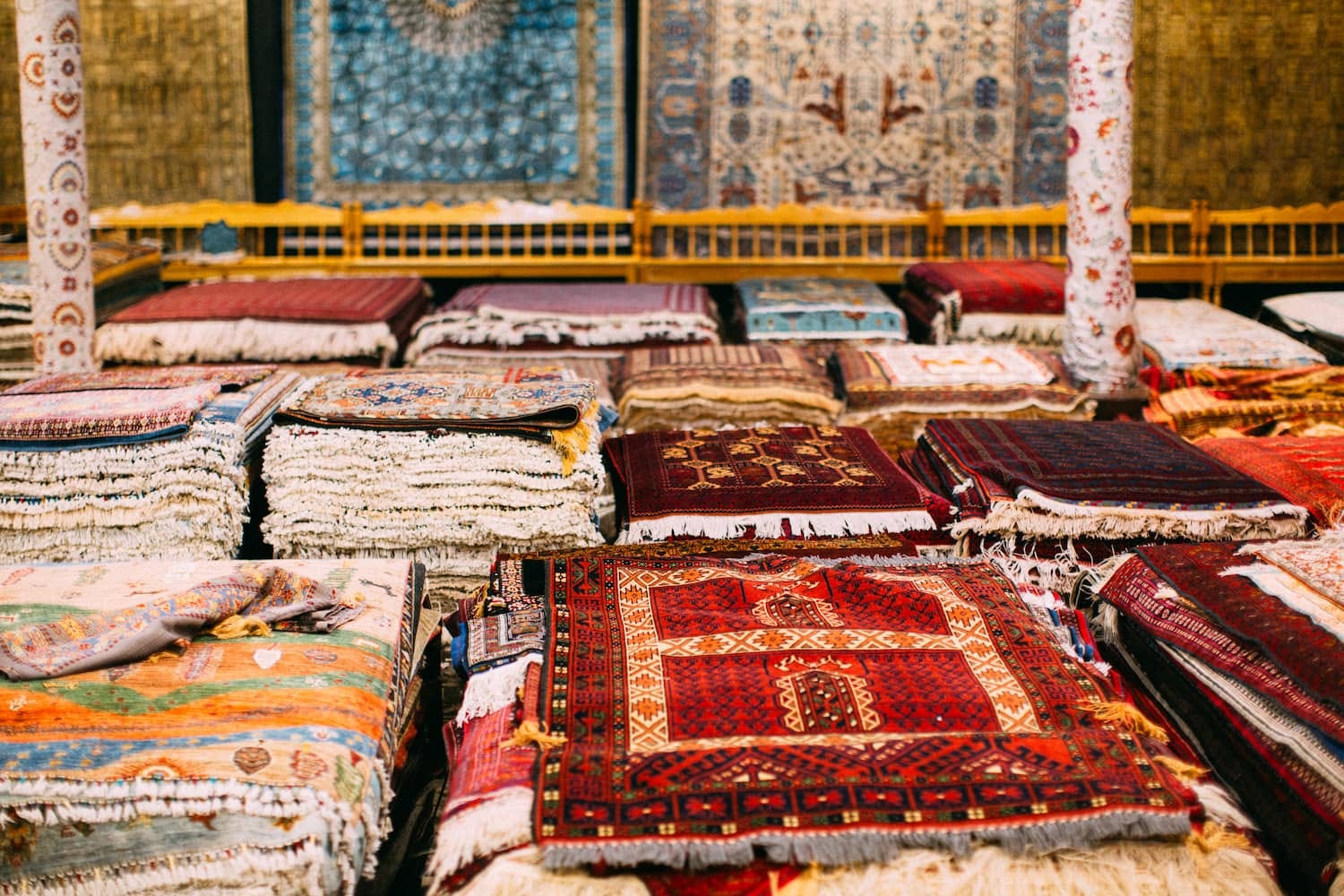
I came home with a suitcase full of treasures: a stunning miniature painting on sturdy silk paper; a camel hair runner; a few yards of ikat fabric; a tea set with the same pakhta pattern we saw in every restaurant; and a silk paper Christmas ornament. My only regret? Not picking up a pair of burgundy ikat velvet Mary Janes from Teplo in Tashkent.
For more Uzbekistan tips, tricks & recs — including design-forward city guides for Tashkent, Bukhara, and Samarkand — visit Armchair-Traveler.com.