

Design Diary: London
A love letter to maximalism-maxxing in the land of the stiff upper lip

My nose was practically pressed up against the gilt frame’s protective glass as I tried to decode the scene in front of me: a raging mob with their bats and clubs, a still-nursing sow and her piglets fleeing the violence, a maiden being coaxed back to consciousness with smelling salts - pure Hogarthian satire. Though I’d landed at Heathrow just hours earlier, I was completely mesmerized, my bleary eyes darting back and forth across the canvas.


Minutes later, the docent’s soft voice shook me from my reverie, herding me and my fellow visitors to the other side of the tiny gallery, which had grown stuffy in the afternoon sunlight. She promptly donned a pair of white cotton art handling gloves, turned a few weathered brass knobs, and opened up the wall to reveal another series of hidden artworks, hung salon style behind the wall.
Architect Sir John Soane dreamed up these ‘picture planes’ as a way to hang a whopping 118 paintings in the gallery’s tiny 13 by 12 foot footprint. His home and studio is a case study in collecting and connoisseurship: dozens of ancient Roman funerary busts, a full-size cast of the Apollo Belvedere, paintings by masters from Canaletto to Hogarth to Turner and yes, a two-thousand year old Egyptian sarcophagus.


Soane’s home was my first entrée into this decidedly English brand of maximalism: wholly immersive, infused with personality and objects acquired over time, with genuine intent and from real experience. It was in sharp contrast to the restraint that I’d come to associate with the Brits: the parks with their perfectly manicured hedgerows, the tidy white Knightsbridge townhomes with their glossy black front doors, the rigid royal protocols.
I’m delighted to report, though, that London isn’t nearly as restrained as it pretends. If you look for it, I’ve got a sneaky feeling you’ll find that exuberant maximalism actually is all around.
On mixing chintz and disco balls
An oversized brick red awning hides Broadwick Soho’s entrance from casual passersby; it’s easy to miss it if you’re not careful. But as I stepped through the lacquered, cotton-candy pink front door, I felt like Alice stepping through the looking glass: I’d left the grungy streets of Soho and landed in a design-loving Barbie’s dream house.


Extravagant, flamingo-pink wallpaper with its portraits of tropical birds, a blush-toned Murano chandelier with fussy fringed shades, the whimsical Annie Kevans portrait on the back wall - I could hardly peel my eyes away long enough to hand the receptionist my passport. I later learned that designer Martin Brudnizki’s creative concept for the property was “Studio 54 meets your grandmother’s Soho townhouse,” the type of space where you’d “combine chintz with a disco ball.” As I stood in the lobby, grimy and jet-lagged after my red eye, I could only hope that my glamorous surroundings would rub off on me.
On tiles, tiles everywhere
I’m not sure what screams “maximalist” most: a two-story, Arab-style dome glittering with thousands of tiny golden tiles, tucked inside a Holland Park home; gallery walls lined in chartreuse silks and hung with paintings by John Everett Millais and John Singer Sargent; a full-size stuffed peacock whose plumes trail from its perch in the atrium all the way to the mosaic tiled floors; or the full-scale copy of Michelangelo’s Sistine Chapel fresco, The Creation of Adam, hanging casually above the staircase.


But after visiting Leighton House, there’s little doubt in my mind: Sir Frederic Leighton, celebrated Victorian painter, draughtsman and sculptor, was a more-is-more kind of guy. Leighton spent an extraordinary amount of time traversing bazaars across Turkey, Egypt, Syria and Greece, where he personally sourced many of the thousands of tiles and ceramics displayed throughout his home. On a sourcing trip in Damascus in 1873 - in search of tiles for the Arab Hall - he wrote to a friend that he was spending “a vast deal of time in hunting tiles” - a man after my own heart.
On coronation mermaids
My mom and I spent our entire 45-minute walk home from The V&A comparing our favorite displays from the Schiaparelli: Fashion Becomes Art exhibition. My mom was partial to the scalloped satin and tulle confection that Ariana Grande wore to the 2025 Academy Awards; I, on the other hand, couldn’t stop thinking about the evening dress and coat that arts patron Lady Jane Clark wore to King George VI’s coronation ceremony in 1937.
At first blush, it was a perfectly lovely, somewhat subdued getup: a cream-colored silk gown, with a pattern of wispy silver fronds peeking out from behind the simple, cream-colored wool coat with a wide collar.
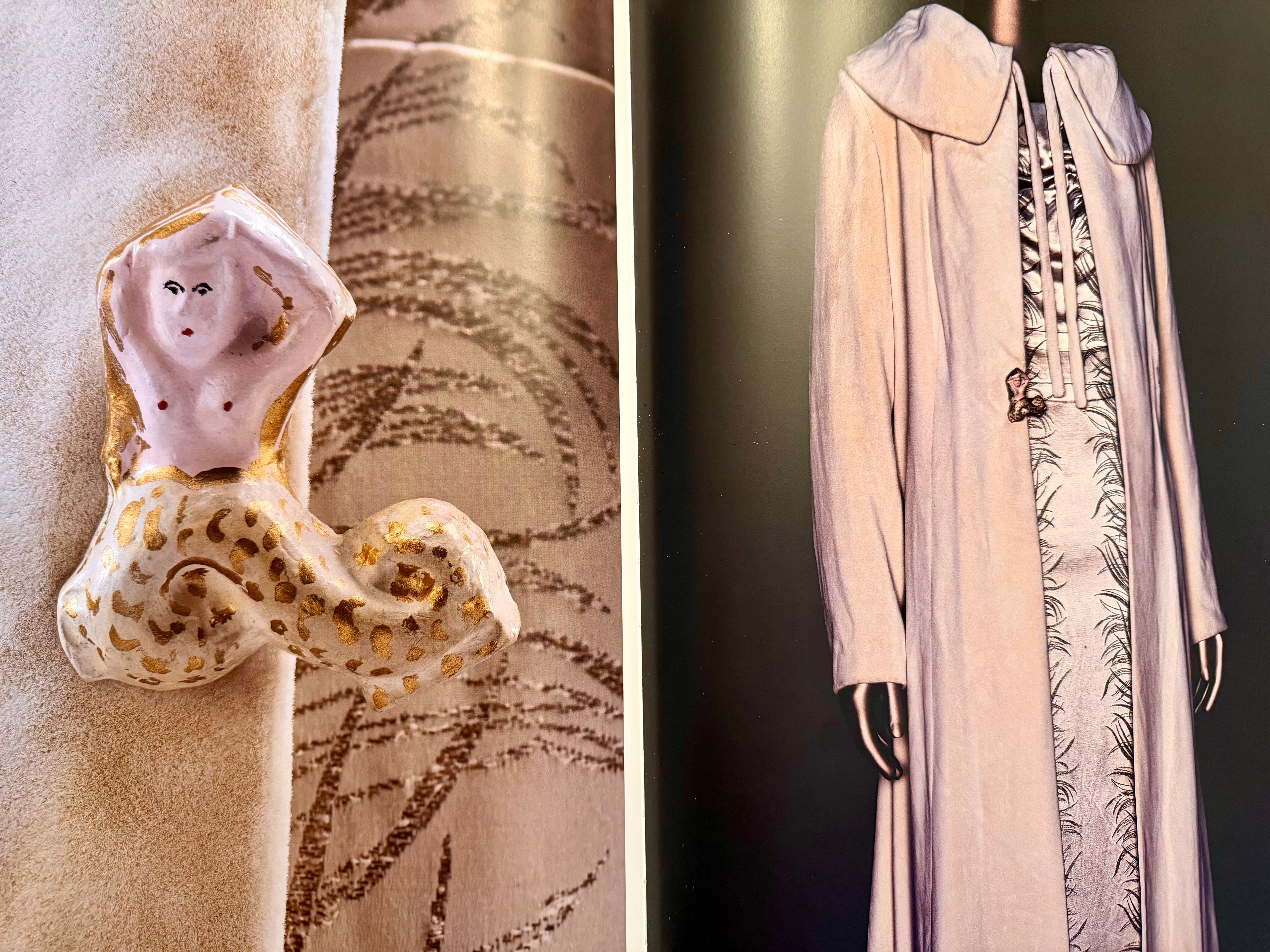
But upon closer inspection, I saw Schiaparelli’s subversive signature: a single, sculptural button in the shape of a mermaid, arms resting sensually above her head, golden curls cascading down to her waist, with a stern face and, naturally, bare breasts.
On dancing queens and chiquititas
I booked our tickets to ABBA Voyage picturing something akin to a singalong Mamma Mia watch party. But as we made our way to the ABBA Arena in Stratford - a 45-minute tube ride from central London - and saw the sequined- and bell-bottomed-masses descending on the stadium, I knew we were finally facing our Waterloo.
I spent the entire first song - a rousing rendition of The Visitors - in a state of disbelief, my senses insisting that it was really Björn, Benny, Agnetha and Anni-Frid on stage, while my brain reminded me that they were avatars (my mom leaned over a few minutes in and whispered, “This is SO cool… and SO creepy.”).
The next 90 minutes were a technicolor fever dream: the pounding electric guitar in the opening bars of Does Your Mother Know, a laser light show complete with enormous gold coins falling from the ceiling during Money, Money, Money, and a heartfelt throwback to Eurovision 1974 in Brighton, where Waterloo swept the contest - no thanks to the Brits - and sent ABBA to the top of the worldwide charts. Thank You For The Music, indeed.
On a suitcase filled with candlesticks
A few days later, I followed my sister and brother-in-law through the cobblestone streets of Norwich, in search of a medieval church-turned-antique shop - St. Gregory’s - that they’d visited on a previous trip. I was itching for a treasure hunt - I’d come home empty-handed from Portobello Road a few days prior - and had a wad of cash burning a hole in my pocket.
I spent hours poring through inventory - Wedgwood knickknacks, Royal Doulton odds and ends, vintage Marks & Spencer picnic hampers - not searching for anything in particular, except an “I can’t leave this behind” feeling.
Finally, on my third lap, I stumbled on a pair of splashy porcelain candlesticks on ormolu bases, with jewel-toned parrots perched atop blooming tree trunks. I was instantly smitten: they were over-the-top, glamorous and would look perfect against the botanical wallpaper in my dining room. They reminded me of the tropical birds on the wallpaper at Broadwick Soho.
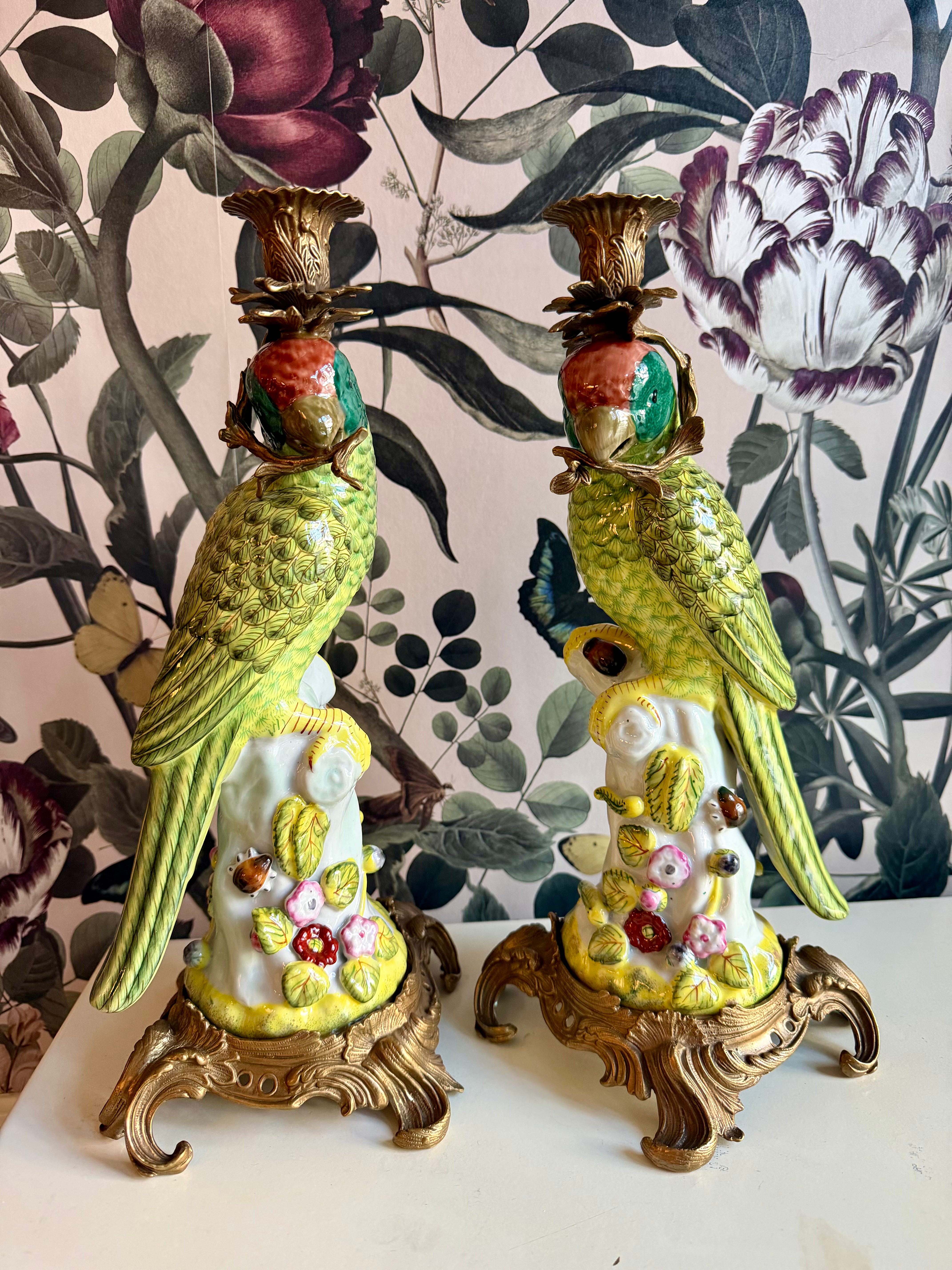
Of course, I hemmed and hawed - they were pricey, at £275 for the pair - and left the shop that afternoon empty-handed, only to return a few days later, cash in hand and ready to buy after a brief negotiation down to £245. And now that they’re home, I can’t imagine my dining room without them.
Such adventures the UK offers behind all of those stately front doors! Great fun!